


In the previous article From Utility to Aura I talked about the idea of transforming the vernacular artifact, through a palimpsestic process, into an artistic relic. In this article I will talk about the idea of how we have been trained not just to see but to read and by reading I mean a form of listening.
When we read something we are, in effect, ignoring the representational medium of language and gazing past it to extract or listen to the ideas and information the language is carrying to us.
What if this activity of reading is carried into the field of abstract art?
From Utility to Aura: Turning Artifact into Relic

Lesley Harrison of the North Sea Poets pointed me to her article about erasure poetry and asemic writing using my work as an example. I thank her for her kind words. Reading her thoughts I was inspired to do a series of articles on asemic writing.
The Saccadic Rhythm: Why Seeing is a Time-Based Art
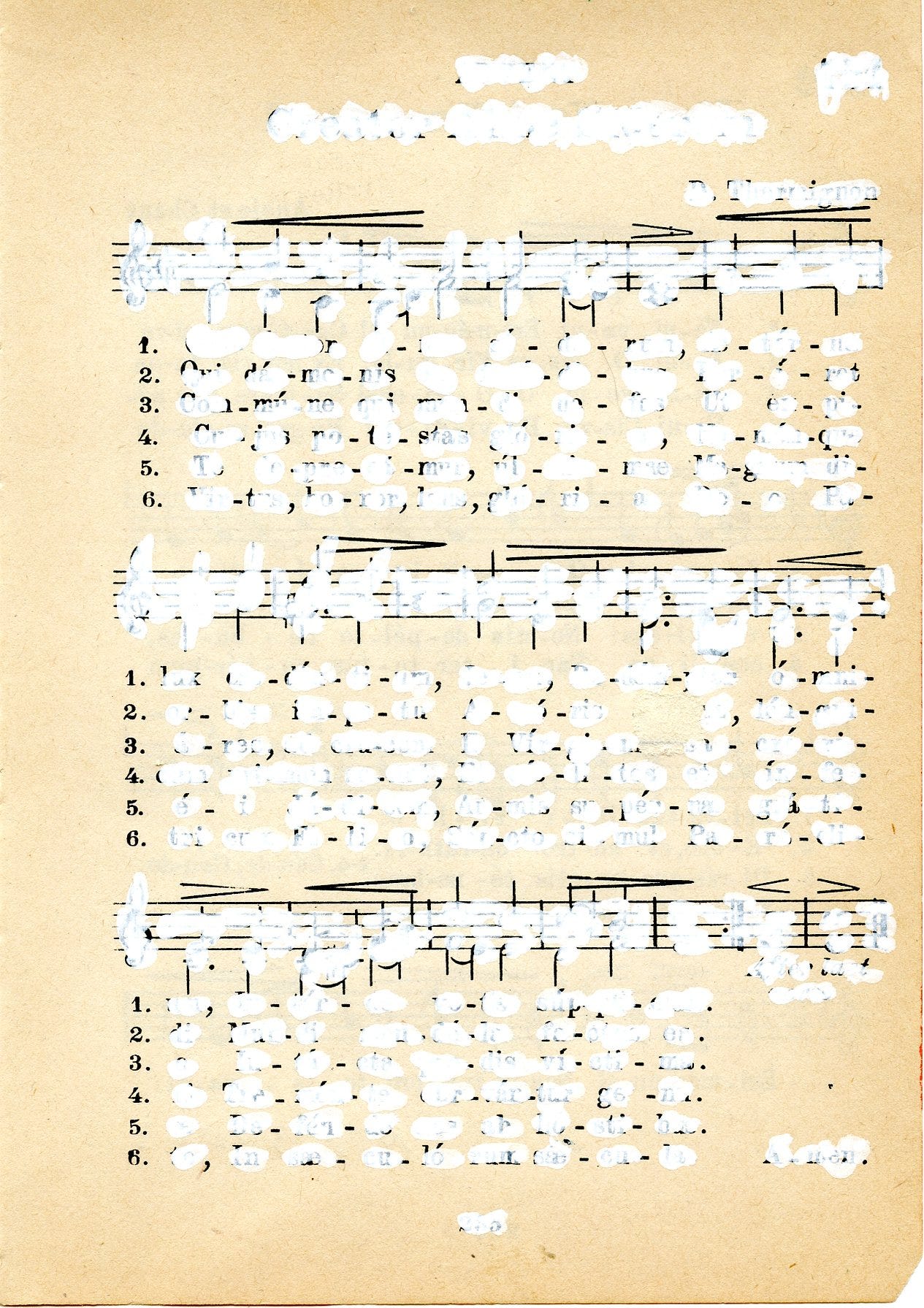
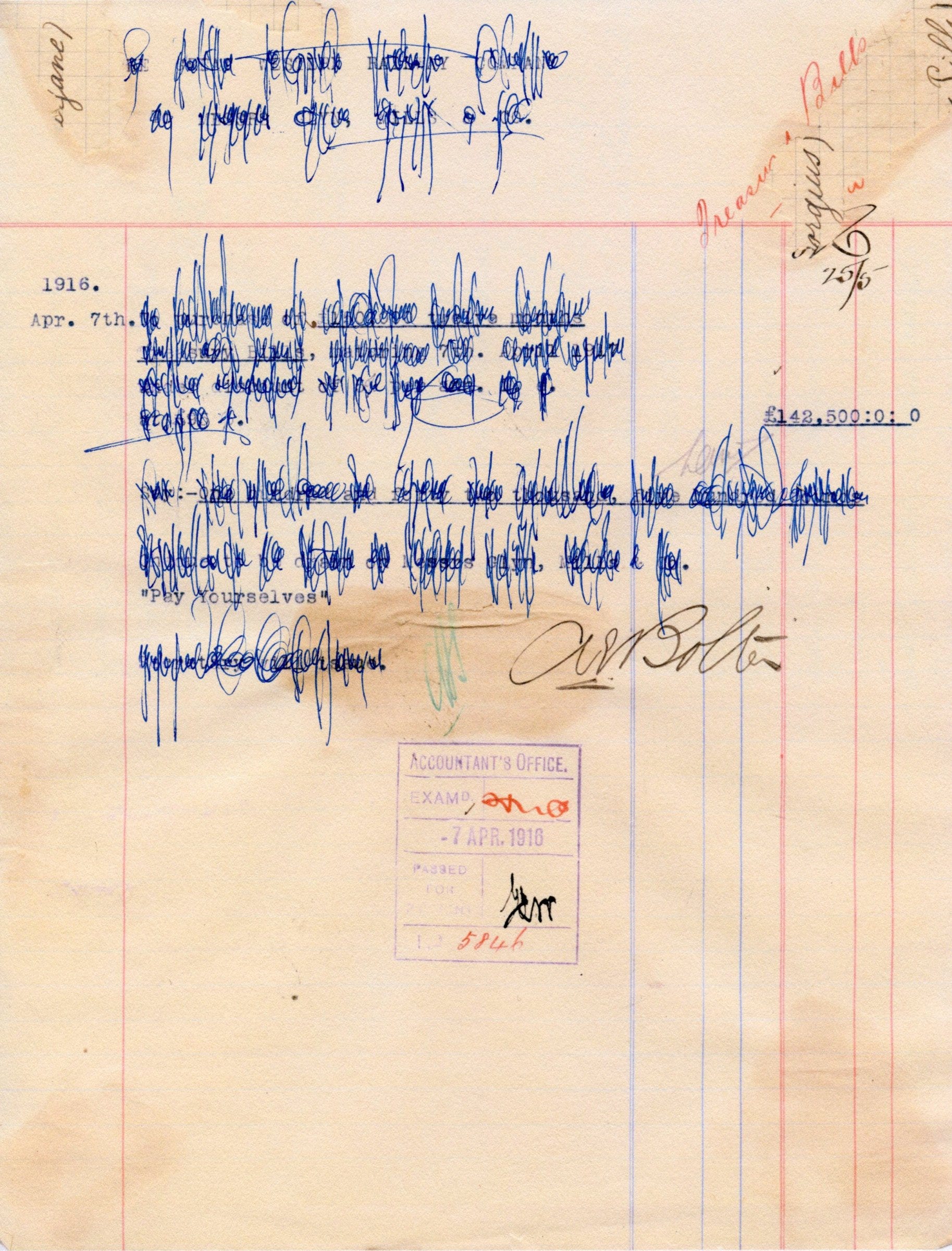
When we look at a page of asemic overwriting, we are immediately met with a paradox. Our brains are deeply conditioned to find patterns, decode symbols, and extract literal information. When the eye encounters a transformed historical document, it naturally tries to read. But because the marks are illegible, the typical transactional process of reading breaks down.
Instead of a passive extraction of data, the act of looking becomes a kinetic experience. By retaining language remnants - shards of letters, faint typographical lines, or isolated vowels - within the overwritten surface, the work intentionally triggers a phantom sense of reading. It encourages a state of looking that closely mimics listening to a piece of music. It forces us to recognize a fundamental truth about visual art: seeing is inherently a time-based medium.
Chronostasis: The Dance of the Moving Focal Point
This temporal engagement relies heavily on the biological reality of human vision. We often assume that our eyes take in an entire visual field all at once, like a camera capturing a single snapshot. In reality, our brains construct a complex illusion.
Physiologically, we only see with high-resolution clarity through a remarkably tiny focal point. To navigate the world, our eyes perform small, rapid, involuntary movements called saccades. We jerk from point to point, stitching the world together millisecond by millisecond. Everything outside this narrow, razor-sharp window belongs to a blurry peripheral vision.
This peripheral sight is not empty space; it gives us a general feeling of the surrounding environment. In an asemic work, your tiny focal point hunts across the page, tracking the remnants of the script. Meanwhile, your peripheral vision absorbs the blurry context of the original document - the ghost of the old ledger, the faded ink of a letter, or the formal geometry of an old form.
Seeing as Listening
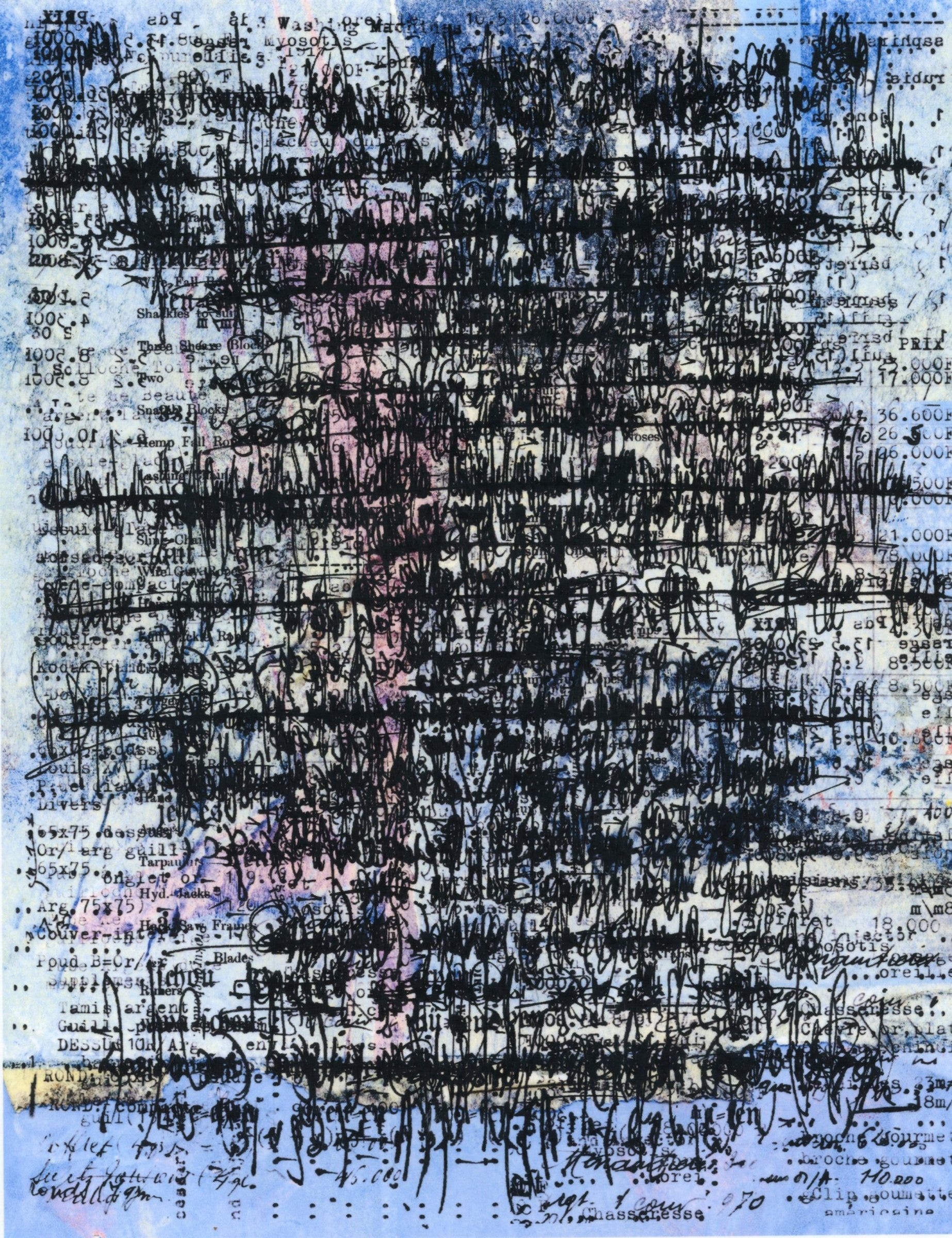
By encouraging the viewer to scan fragmented, unreadable text, the work stretches the temporal experience of focused looking. You cannot consume the image in a single glance. Your eye must travel along the loops, paths, and intersections of the ink.
This journey mirrors the physical process of listening to a musical piece unfold note by note. Music requires time to exist; a chord only has meaning in relation to the silence before it and the notes after it. Similarly, the asemic line demands a slow, deliberate presence. It builds a saccadic rhythm across the page, transforming the static paper relic into a living choreography of sight through the accumulation of the image through thousands of movements of our focal point as it moves around the surface gathering this abstract information into memory.
By demanding this slow, rhythmic focus, the artwork actively resists the rapid, hyper-fast consumption of modern digital imagery. It forces the brain to slow down, grounding the viewer in the physical mechanics of their own body - their own eyes.
This was the revolution created by Braque and Picasso with the cubist image - the breakdown of the image into shards and bits and pieces that have to be acquired through time by gathering the image through the focal point in order to build the image in the memory like a musical work is appriciated through memory over time.
But this biological intervention is only the beginning. What happens when we completely step away from the rational need to decode? What language are we actually speaking, writing and reading when the alphabet dissolves entirely?
Next week, in our final installment, we will dive into the “root tongue,” look at the political philosophy of Guy Debord, and explore how unreadable marks can rescue our true nature from a simulated world.
STUFF THAT HAPPENED LAST WEEK
OK, here is the new way I am doing the subscriber newsletter. It will be more of a weekly digest or have a table of weekly contents of things that were posted but not sent as endless emails. That way you can keep and refer to the weekly emails as a way to find everything. So, unless you visit the Touchonian website on Substack frequently, here are some things you missed that happened since the last email.
Some Extra Ideas

Ok here is another little experiment related to a weekly email as mentioned in the article:

See what happened in NOTES
I love hearing from you! I want to hear what is on your mind. (and not with emojis please.)
Saccades and saccadic rhythms--whole new concepts for me, but you explain them so well. Thanks for expanding my mind!
It becomes a synesthetic experience, doesn't it?