


Lesley Harrison of the North Sea Poets pointed me to her article about erasure poetry and asemic writing using my work as an example. I thank her for her kind words. Reading her thoughts I was inspired to do a series of articles on asemic writing.
From Utility to Aura: Turning Artifact into Relic
Part 1 of a series exploring how asemic overwriting rescues forgotten vernacular history from the dustbin of time.
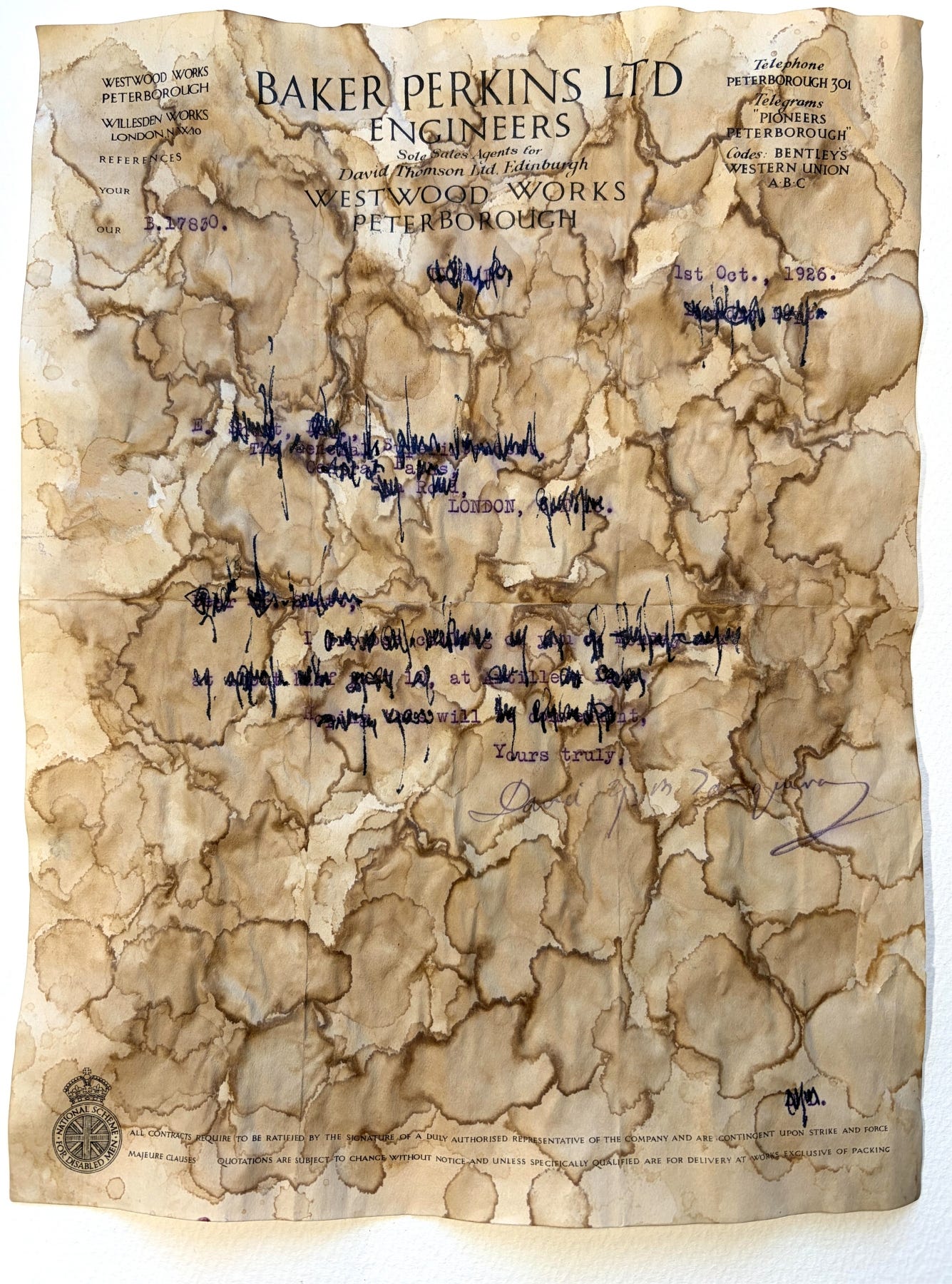
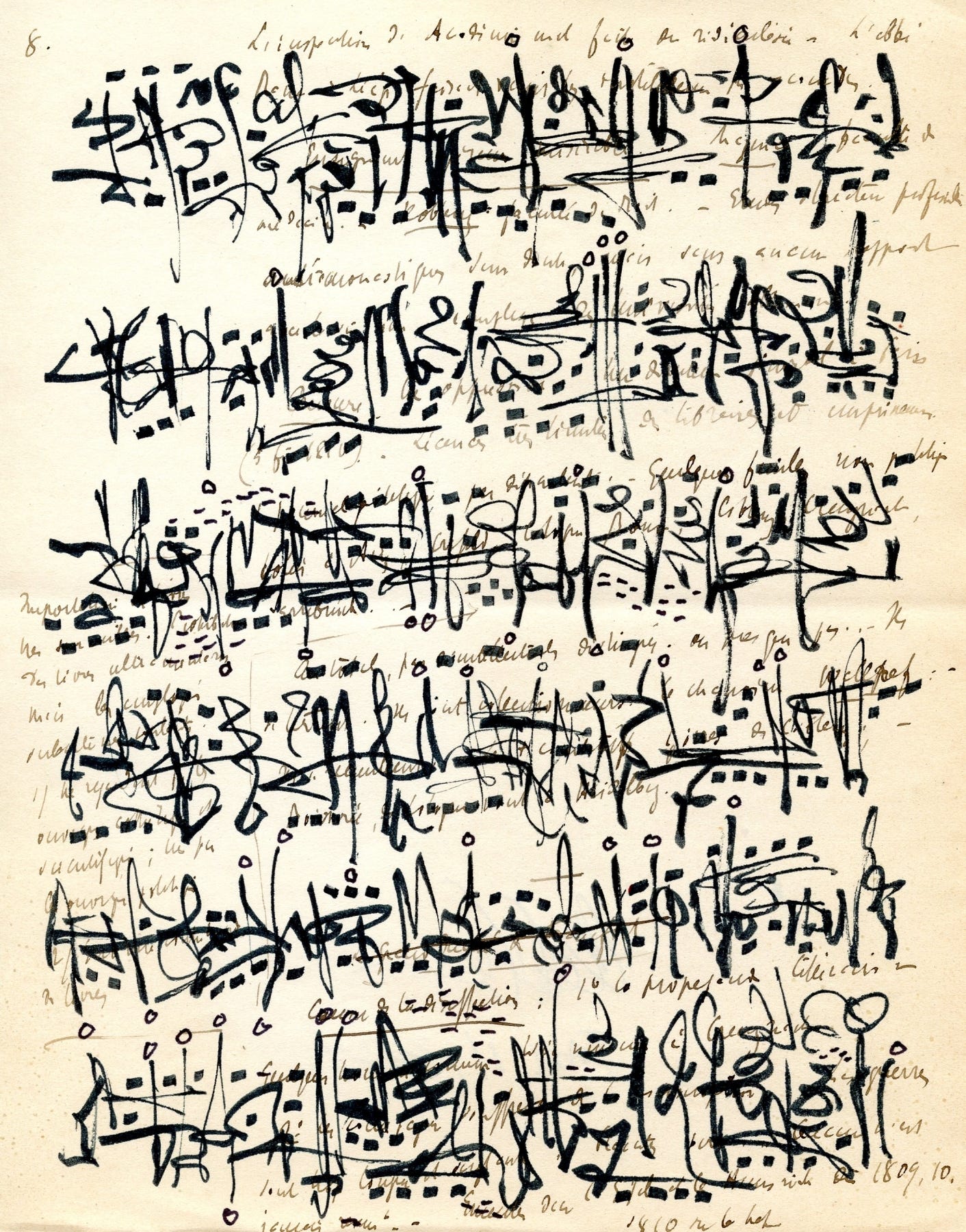
To overwrite a document with lines that cannot be read is to perform an act of artistic alchemy. When we apply asemic writing - text that has the form of language but lacks a literal, semantic meaning - over preexisting paper artifacts, we do not simply deface them. We reface them. We transform them. This process strips a utilitarian or vernacular document of its standard - but now defunct - utility and replaces it with an intuitive, visual weight. In doing so, the mundane record dies, and the artistic relic is born.
The Deconstruction of the Vernacular
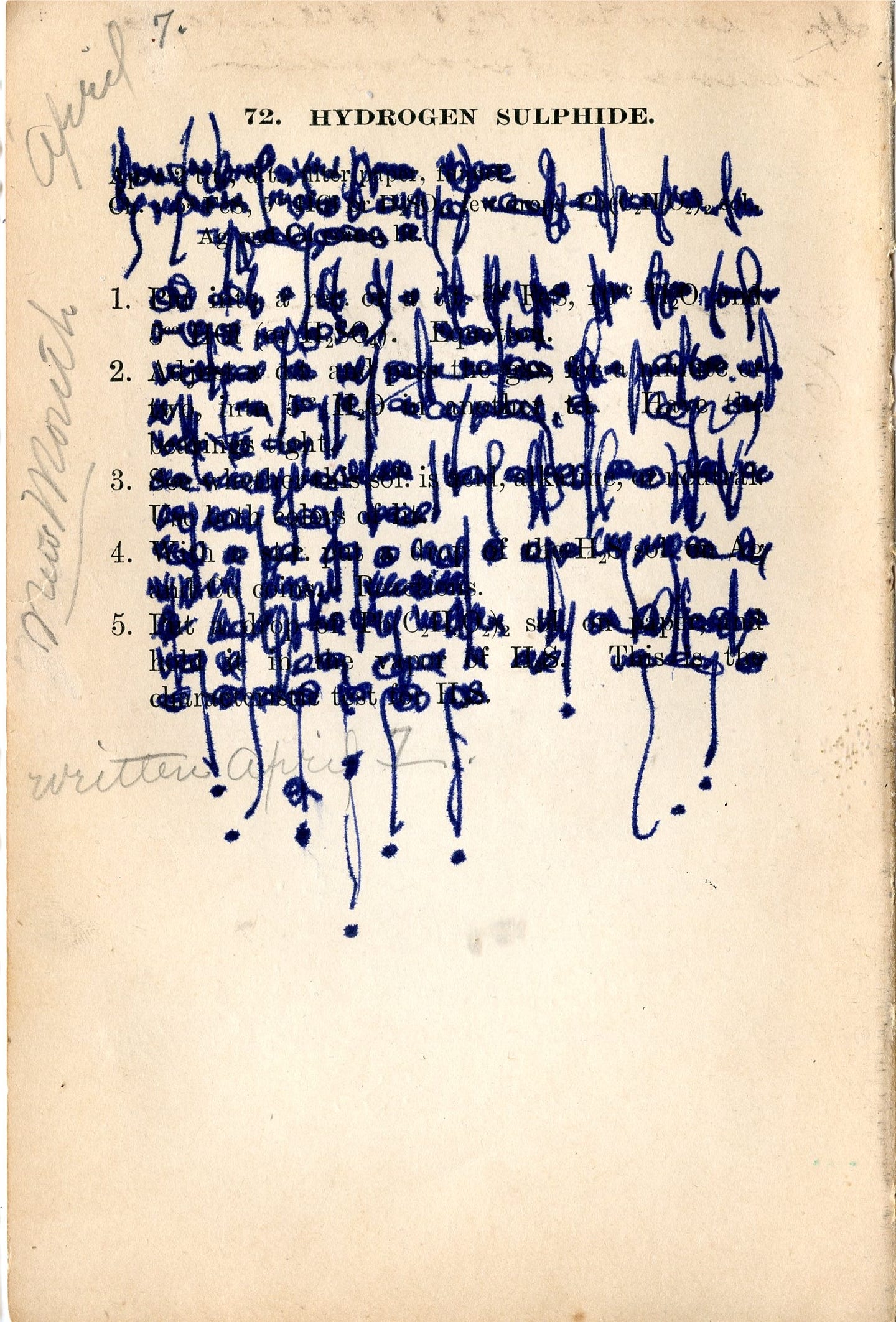
Everyday paper artifacts - century-old accounting ledgers, standard legal receipts, forgotten bureaucratic forms, or casual personal notes - were born out of utility. They are vernacular objects, created not for display, but to perform a transactional or communicative function within a specific moment in time. They carry data and enforce logic. They are of a temporary, ephemeral use.
Asemic overwriting intentionally disrupts this functional history. By layering illegible, abstract marks over the original print or script, the artist creates a definitive visual barrier.
This act of obfuscation fundamentally changes how a viewer interacts with the object. When the text can no longer be decoded, it can no longer be used as a tool. Instead, the viewer is forced to look at the structure of the writing rather than through it for the data. The object shifts instantly from a piece of practical infrastructure into a site of artistic contemplation, dissolving its utility to make room for pure creative aura.
The Architecture of the Palimpsest
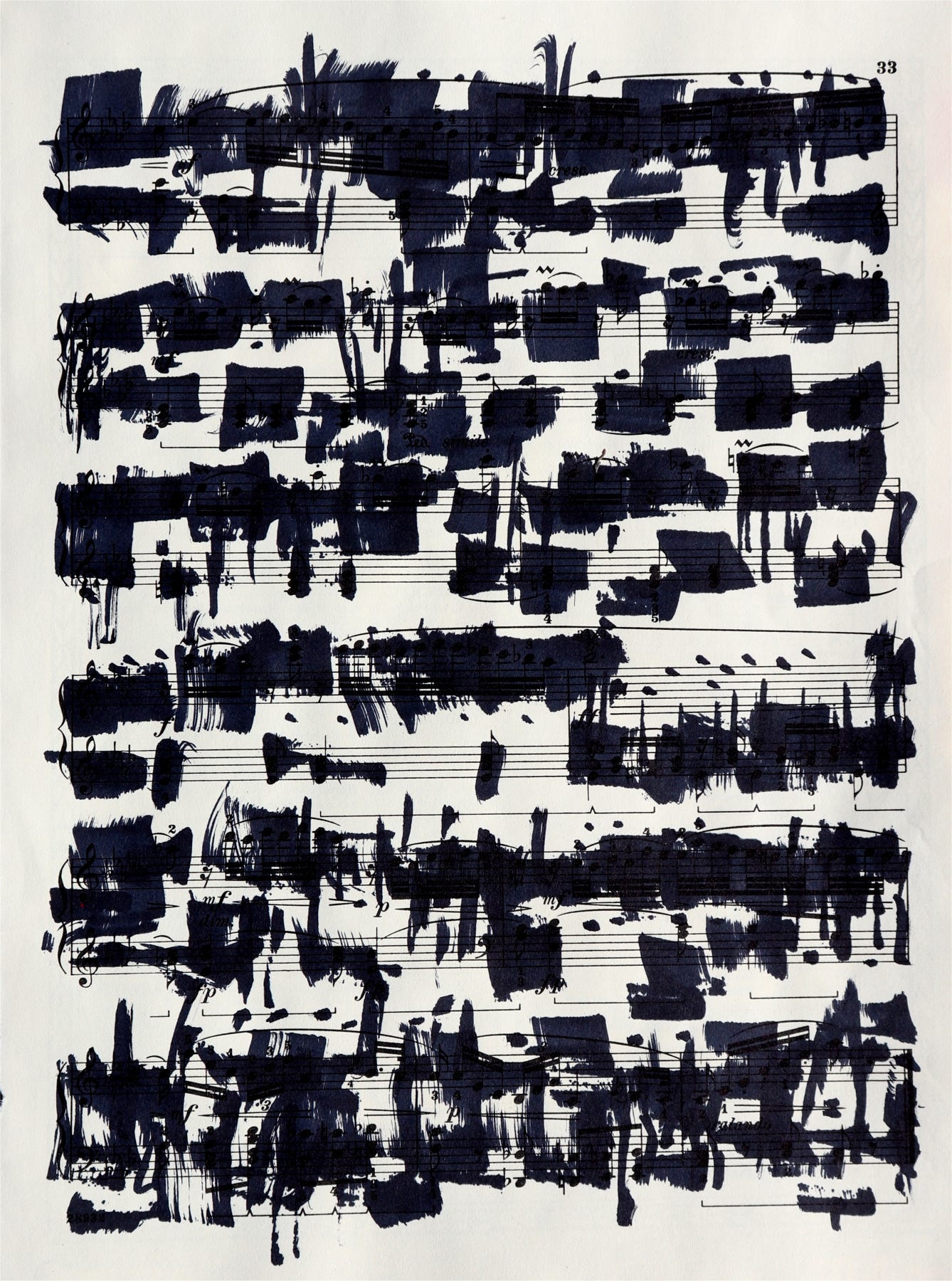
It is critical to clarify that this process is not an act of erasure poetry, at least not in the sense of redaction or censorship. Censorship seeks to silence, and redaction seeks to hide; overwriting, conversely, seeks to reveal and to integrate. Rather than treating the surface as a blank slate to be wiped clean, the existing visual elements, typographical geometry, and marginalia are treated with reverence, serving as an intricate compositional guide.
By deliberately leaving visual clues to the origin of the document - especially when specific visual elements serve the final work - the piece remains anchored in historical reality. The past is not destroyed; it is collaborated with, creating a modern, psychological palimpsest. Historically, a palimpsest is a piece of parchment scraped clean and reused, leaving faint, ghostly traces of its original writing underneath. Here, the original bureaucratic or domestic layers are left completely visible beneath the new, abstract gestures.
This creates a powerful aesthetic tension between two distinct human impulses:
The Utilitarian Layer: Represents historical structure, institutional logic, social order, and standard communication.
The Overwritten Layer: Represents raw human intuition, subconscious gesture, and a universal language entirely free from the constraints of the laws of grammar.
The two layers bleed into one another. The rigid lines of a financial ledger, commercial receipt or the formal font of a legal document are swallowed by fluid, unreadable script, making the object feel deeply ancient yet thoroughly contemporary.
Preservation Through Transformation
A relic is an object that survives from the past, valued for its historical, spiritual, or emotional connection to human experience. Asemic overwriting infuses everyday utilitarian paper with the exact qualities that define a relic:
The Aura of Esoteric Wisdom: The marks mimic handwriting but refuse to reveal a specific meaning, carrying an aura of hidden knowledge that triggers a sense of profound mystery.
The Trace of the Hand: In a digitized world, physical mark-making emphasizes the bodily presence of the artist’s hand, leaving a permanent monument to a fleeting human moment over an old, discarded record.
Sacred Interruption: By interrupting the natural decay or forgotten status of a vernacular artifact with a fresh creative act, the artist sanctifies the object giving it new life in the realm of art.
Ultimately, asemic overwriting rescues utilitarian artifacts from the trash heap of history and elevates everyday vernacular paper into timeless relics of visual poetry. But once the document has been transformed into a relic, how does the human brain actually engage with it? How do we read a text that refuses to be decoded?
Next week, in Part 2, we will look at the biology of vision, the rhythm of music, and why looking at an asemic artwork is a radical act of slowing down time.
I've also been doing a lot of thinking about both the practice of asemic writing and erasure poetry lately. In particular, I've wondered why I've been far more attracted to using free newspapers, discarded materials, etc., rather than recognizable classics, novels, poems, etc.
It is precisely this idea of honoring and giving new life to matter destined for complete obliteration (recycling, or the landfill) while revealing the beauty, longing, and shared heritage of its underlying language. My early academic background was in historical linguistics, so I've often reflected: nearly every word we use is etymologically prehistoric; they are ancient poems in themselves that have undergone transformations--shifts in sound, orthography, and meaning, partial semantic erasures--over the years. And asemic writing, for me, is an certain kind of abstraction of the desire to express and communicate, which is itself deeply communicative.
Looking forward to part 2!
Totally fascinating!