


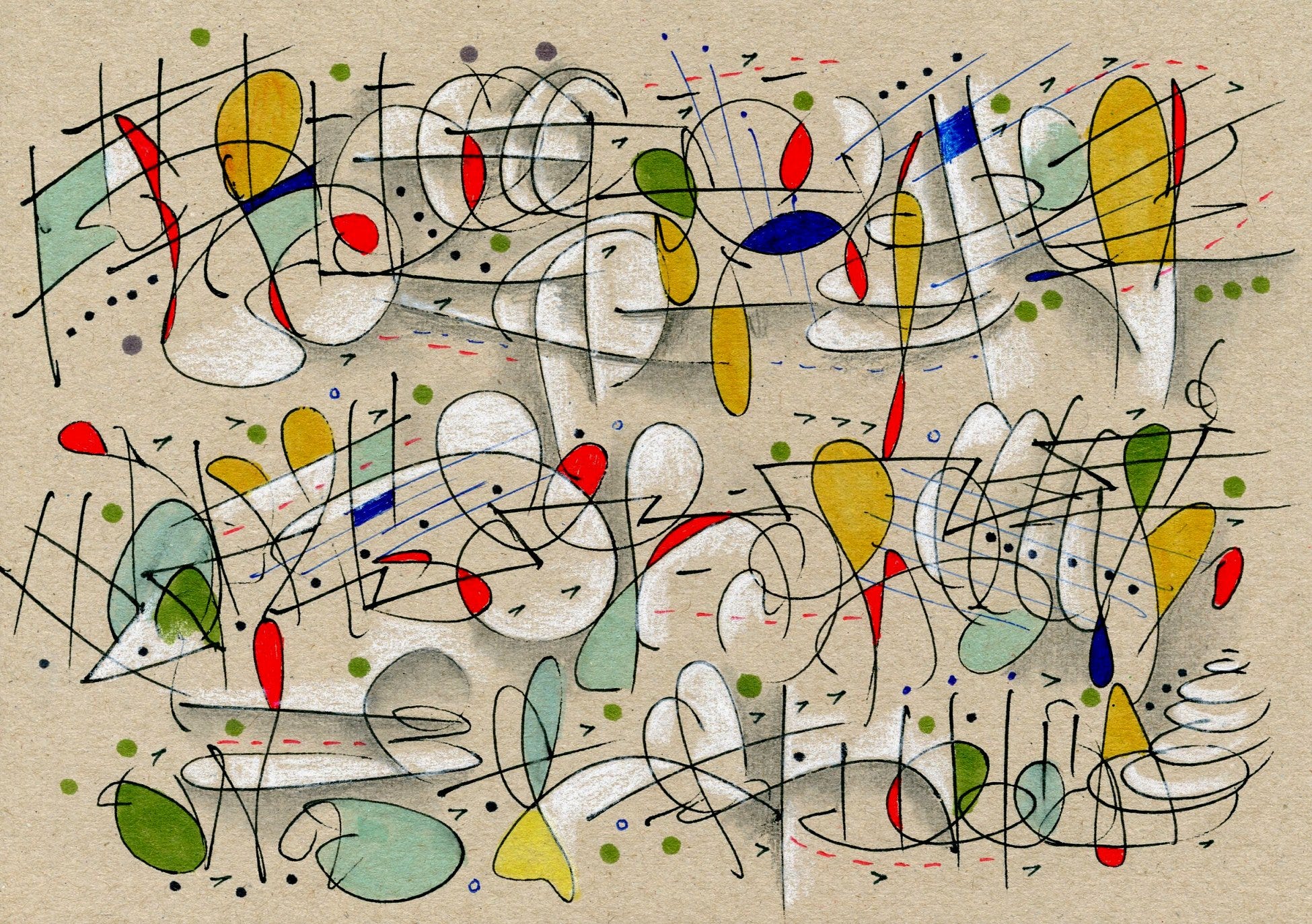
The Root Tongue vs. The Spectacle: Subverting the Simulation
In the first two installments, we explored how asemic overwriting converts everyday utilitarian papers into artisticly sacred relics, and how it stretches the time-based biology of how we look at art. But this practice is not just an aesthetic experiment; it is a vital act of cultural resistance in many ways.
In an era dominated by hyper-mediated digital environments, our excessive reliance on human language has become a trap. We live inside what the French theorist Guy Debord termed the Society of the Spectacle - a capitalist reality where genuine human experiences are replaced by a glossy, simulated media landscape. We are constantly bombarded by semantic messages, ads, notifications, and political propaganda designed to distract us from our own true natures. This language of the Spectacle manipulates our rational minds, turning us into predictable products and passive consumers. We are chronically confused, constantly mistaking the simulation and its messages for the Real.
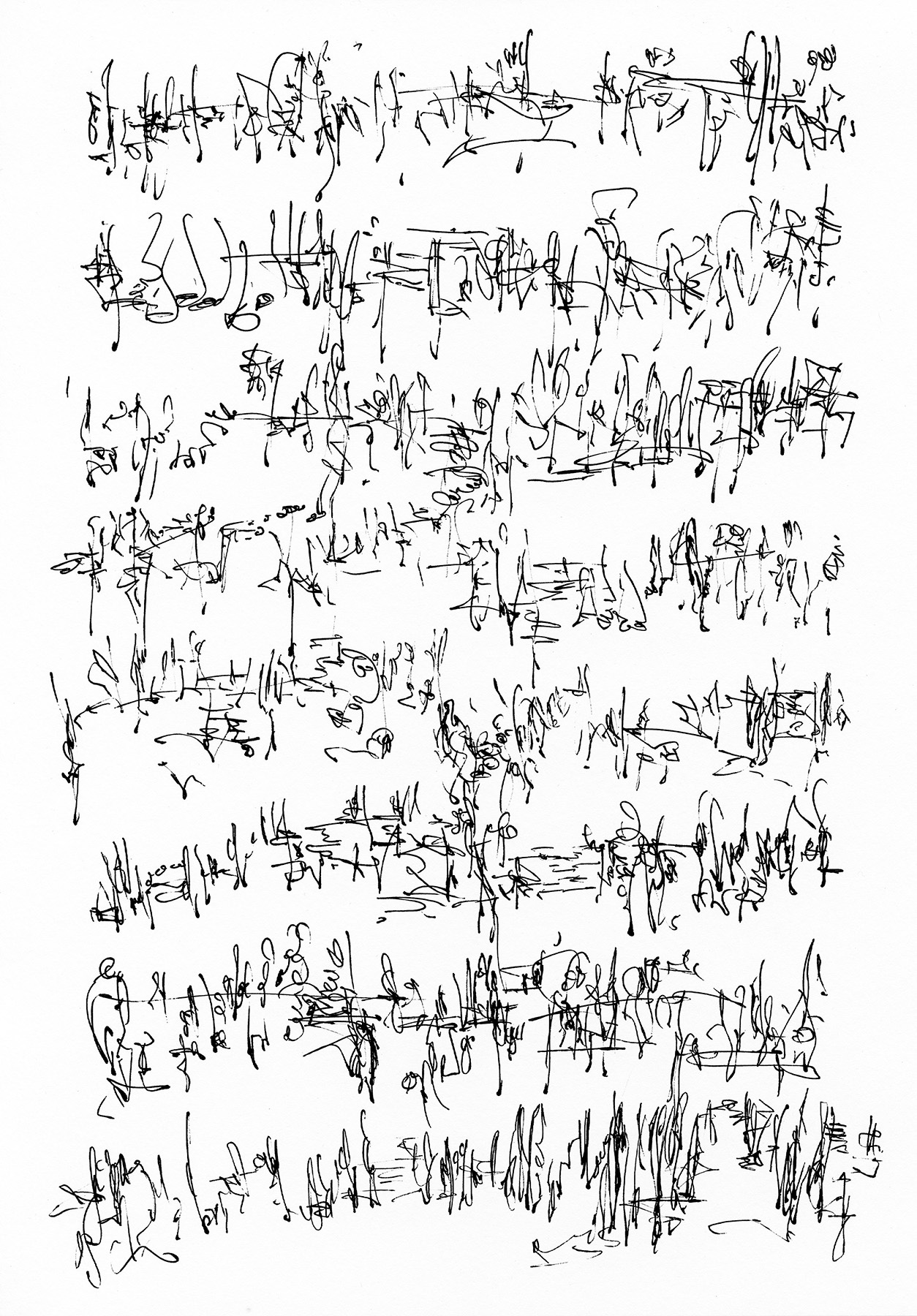
Speaking the Root Tongue
When language is weaponized to sell and control, literal meaning breaks down. To fight back, the artist must step away from formalized alphabets entirely. Beneath our rigid human grammar lies the root tongue - the all-pervading, intrinsic language of the universe talking to itself in infinite multiplicity.
Our primitive human languages are clumsy, limited tools. They are prone to corruption and poorly suited to translate the vastness of this fundamental reality. They trap the intellect within a purely rational framework.
Asemic writing shifts the burden of communication away from institutional alphabets and returns it to the human body. It relies on the raw language of the hand, translating subconscious intuition directly onto the page through kinetic gesture. This somatic expression bypasses semantic gatekeeping to speak directly to and about what cannot be directly spoken - tapping into a pre-literate intelligence. It is a language we all intuitively understand deep below the surface of learned grammar.
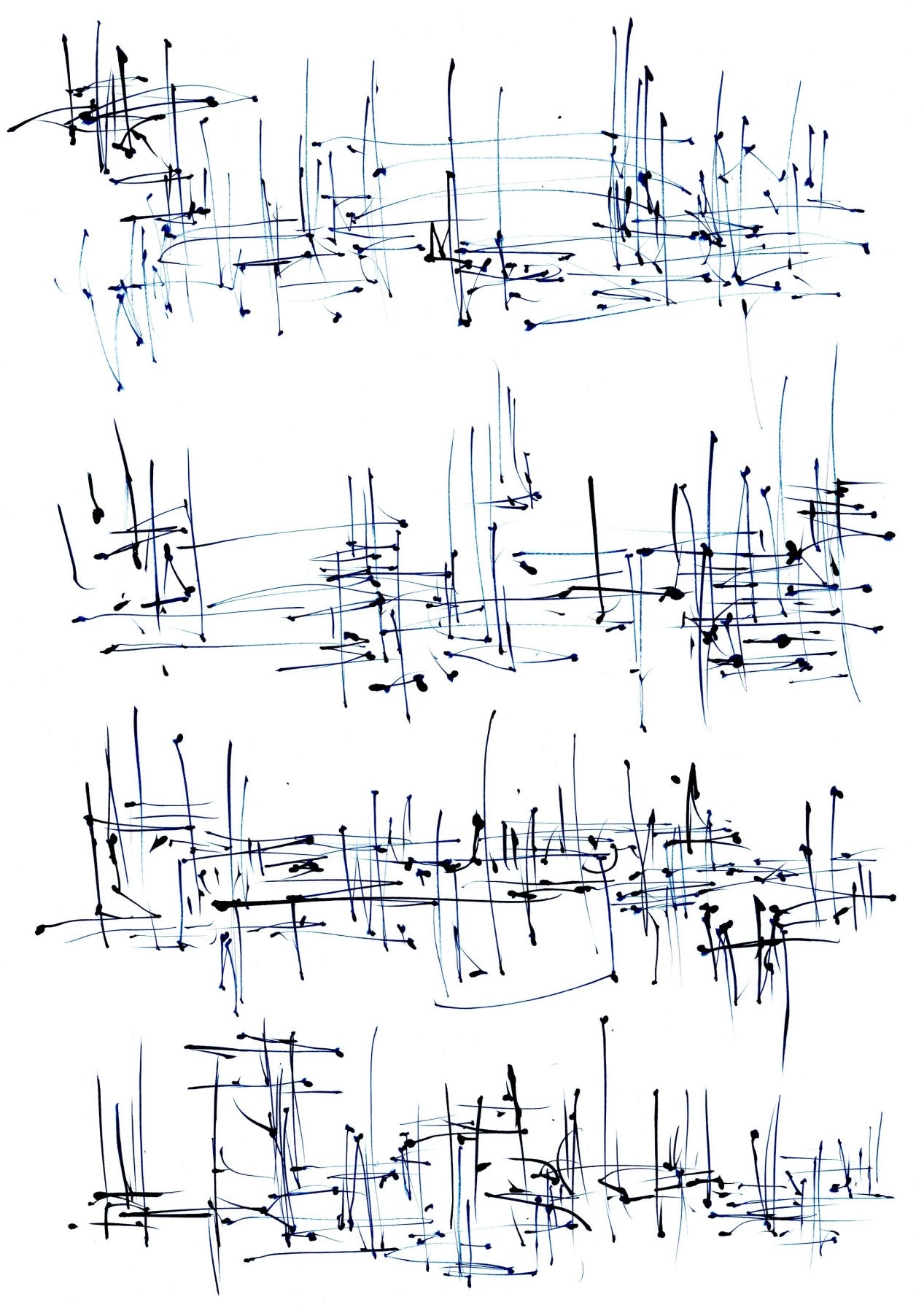
Short-Circuiting the Transaction
Advertisers and propagandists exploit the rational mind’s ever present, evolutionary urge to decode, label, and categorize. They give us text and image, and we instinctively try to pull a transaction out of it. By presenting script that firmly, beautifully refuses to be decoded, asemic overwriting short-circuits this transactional loop.
When you look at an altered document, the unreadable mark becomes an act of concrete truth. It invites the reader to make a cognitive leap across the divide, moving away from rational intelligence and stepping fully into their intuitive intelligence. By stripping the historical document of its ability to sell, instruct, or bureaucratize, the artwork stops the machinery of the Spectacle in its tracks.
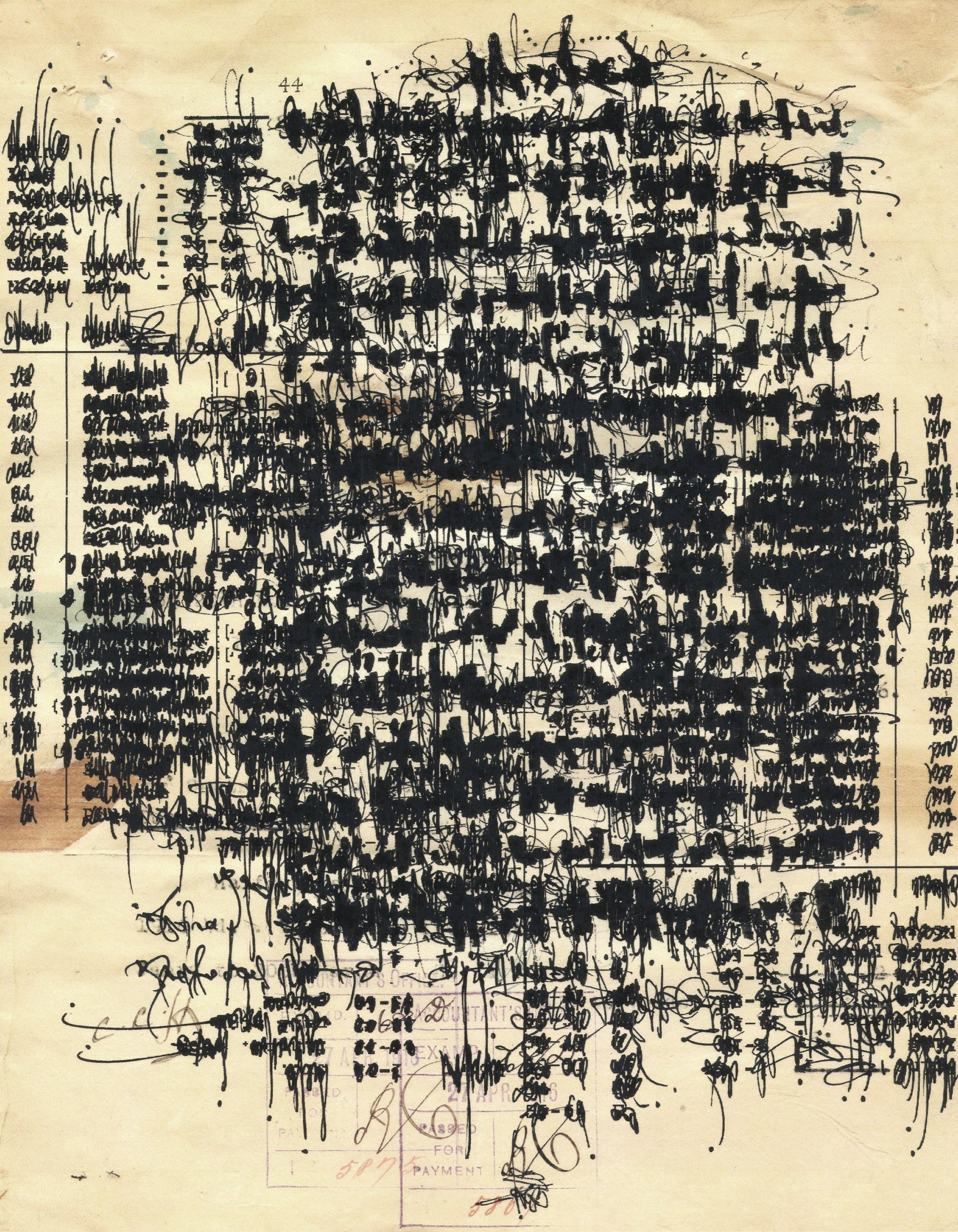
Reclaiming the Real
Ultimately, this is why the converted paper artifact becomes a relic. It is a preserved vessel of pure human presence.
The Aura of Mystery: It mimics handwriting but refuses to reveal a specific sentence, carrying an aura of hidden knowledge under a cover of ambiguity.
The Trace of the Hand: In a digitized world, physical mark-making leaves a permanent monument to a fleeting human moment over a dead, bureaucratic record.
Sacred Interruption: It halts the natural decay of vernacular history, sanctifying a forgotten piece of ephemera and drawing it into the timeless realm of art.
Asemic overwriting clears a quiet, unmediated space within the digital noise. It rescues utilitarian artifacts from the trash heap of history, breaks the spell of the simulation, and invites us to look past the text, reconnect with our interior natures, and experience the raw weight of the Real.
(More about Root Tongue. Last fall I wrote a series of pieces called the Root Tongue Dust Letters. You can search for them on the homepage of the Touchonian.)
[01] Introducing the Root Tongue Letters
![[01] Introducing the Root Tongue Letters](https://substackcdn.com/image/fetch/$s_!o5Dp!,w_1300,h_650,c_fill,f_webp,q_auto:good,fl_progressive:steep,g_auto/https%3A%2F%2Fsubstack-post-media.s3.amazonaws.com%2Fpublic%2Fimages%2F6d4681f4-8cc9-4525-990b-3ade362dbd3a_1000x778.jpeg)
This is the first installment of a manuscript I am working on. I will be publishing this series on Saturdays through at least the Fall.
Thank you for following along with this three-part series.
Please feel free to share your thoughts, your own experiences with asemic art, or how you navigate the noise of the Spectacle in the comments below.
STUFF THAT HAPPENED LAST WEEK
I accidentally emailed the previous article The Arts as a Unified Field. I had intended just to post it online instead of email it. Otherwise I have mostly been posting incoming works for the visual Poetry and Color Exhibition coming up August 15 in Los Alamos, NM in Notes.
I updated the Exhibition page for the Visual Poetry Show So far about 23 new pieces have come in to add to the exhibit in Los Alamos. Thank you to those who have contributed!
I am going to keep going with the once a week ‘digest’ email posts for a while to see how that works out.
I like how Asemic writing feels both free-handed intuitive as well as deliberate.......as if the hand and mind is putting down a secret message only the subconscious knows. One cannot call it scribbling as that demeans it into useless junk, but there's a beauty and balance to it when viewed as a whole. Even pieces of it up close are magical and flows into the next mark as if it's supposed to.
That first piece of art makes me happy. Set to music, I just may even dance!