


Working in Museum Time
I have come to think of my life’s work as unfolding in what I call Museum Time.
By that I mean I try to think in decades and centuries, not in seasons. My horizon line is not the next exhibition cycle, not the next release window, not the next book. It is the long arc. The slow accumulation. The way a body of work might look fifty or a hundred years from now when viewed as a whole.
I still work every day. I show up. I move things forward. But I do not work by quota. I do not measure my practice against Fashion Time, that restless tempo that insists on something new every season. I will experiment, of course. I enjoy experiment. But I do not organize my life around the urgency of novelty.
Fashion Time is concerned with visibility.
Museum Time is concerned with continuity.
Most of what I write and make is not about me. It is not confession, not branding, not a performance of identity. I am not trying to produce masterpieces. I am trying to remain in conversation with the world. Intuition is my instrument. Experimentation is my method. The work becomes a dialogue between what appears in the culture and what stirs beneath it.
At the same time, I am meticulous about organization.
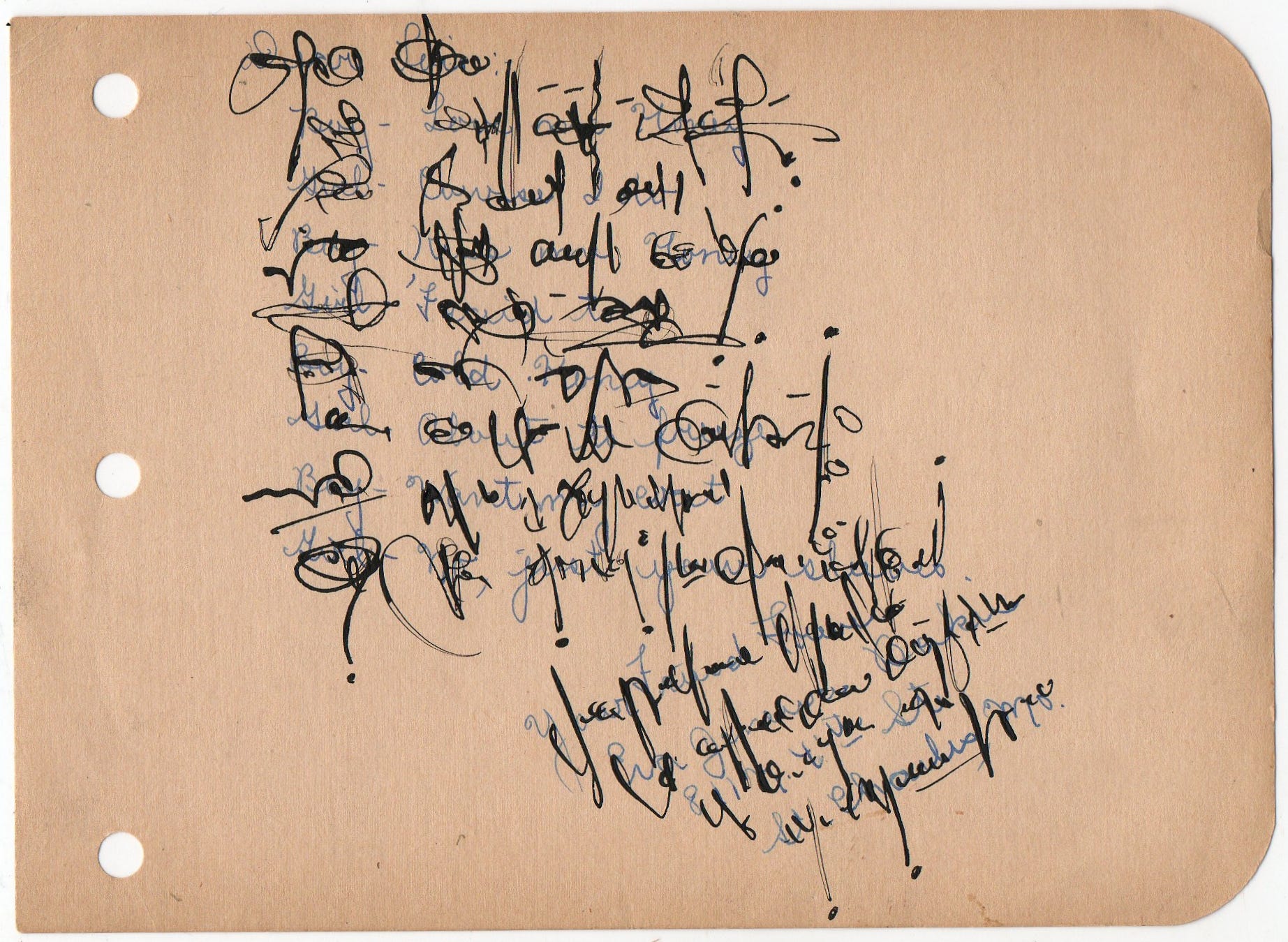
Everything is inventoried. Dated. Archived. Boxed. Indexed. Not because I am obsessed with control, but because I am interested in watching development. The archive is a tool of perception. When you can see your own history laid out in drawers and folders, patterns begin to emerge.
An image I first dreamt up years ago may resurface in a different story. A phrase written in passing may return with new gravity two or three years later. I might discover that I have been circling the same question from multiple angles without realizing it. Then, one day, I connect those threads. What felt separate reveals itself as a single, long meditation unfolding through time.
Without the archive, those relationships would vanish into forgetfulness.
With the archive, the slow intelligence of the work becomes visible.
I do not see my paintings, collages, essays, and fictions as separate achievements. I see them as artifacts within a larger structure. The archive itself, taken as a totality, is the artwork. A single lifelong piece composed of thousands upon thousands of gestures. Some minor. Some more resonant. All part of the same organism.
This is why I say I work in Museum Time.
But there is a tension here.
I also say, “Time is a sharp sword.”
And, “There is all the time in the world, just none to waste.”
Both statements are true.
Museum Time does not mean drifting. It does not mean postponing. It does not mean assuming that tomorrow will handle what today neglects. Time cuts. Years disappear. The body changes. Opportunities close.
Yet growth cannot be rushed.
If you plant a fruit tree, you cannot demand harvest in the second year. You can water it. Prune it. Protect it from frost. Study the soil. But the tree has its own tempo. It will bear fruit when it is ready, not according to your impatient desire.
Art is like that.
A project may take years before it reveals what it is truly about. An idea may need to compost beneath the surface of other work. A story begun in one decade may find its true form in another. You tend the orchard. You do not shake the branches prematurely.
Museum Time requires patience and urgency at once.
Patience in the unfolding. Urgency in the tending.
I work daily because I know time is sharp. I think in centuries because I know the work is larger than a single season of recognition. I archive because I want to witness the slow coherence that emerges across years. I experiment because intuition often knows before intellect can imagine.
The result is not a series of isolated products. It is a living archive.
An orchard in various stages of growth.
Some trees newly planted. Some in blossom. Some heavy with fruit. Some resting after harvest. All part of the same terrain.
If someone were to walk through that orchard decades from now, I would hope they would not see a career measured by trends. I would hope they would see a continuity of attention. A conversation sustained. A life spent tending a field that could not be rushed, only cultivated.
That, for me, happens in Museum Time.
Most excellent!
This idea resonates in particular since I’ve just entered a new decade of life… and inspires me to upgrade some of my systems to be better at maintaining my own archive. Thanks, Cecil!