


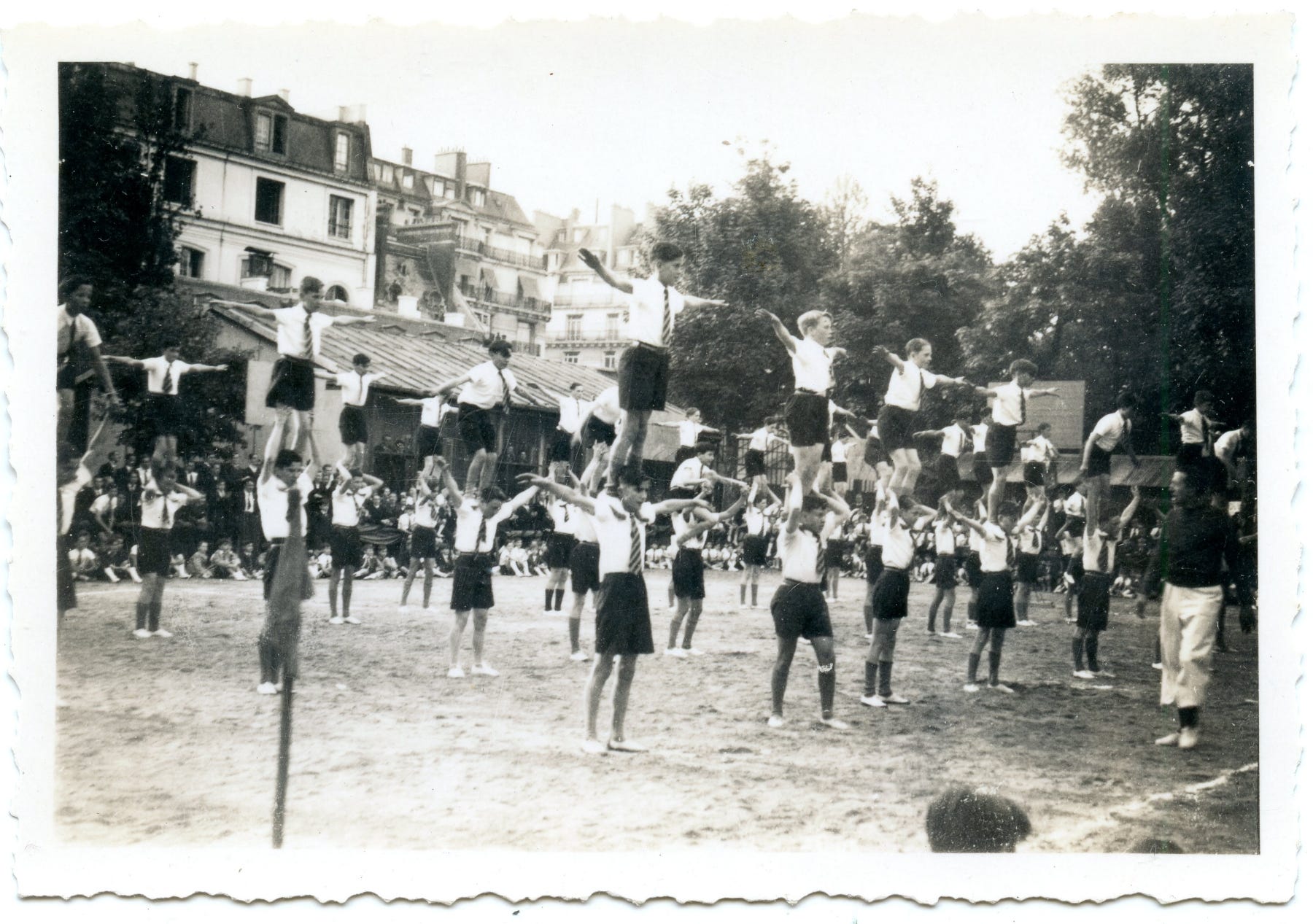
Well-Being as National Security Issue
Journal Entry: April 14, 2026
A nation is only as strong as the condition of its people. Not in rhetoric or symbolism, but in the plain, measurable, lived condition of daily life. If the population is strained, unwell, or unable to participate meaningfully in the economic and civic life, it weakens the nation.
For a long time, discussions around healthcare, affordability, and education have been framed primarily in the language of fairness. The argument has often centered on what people deserve, what is just, what is equitable.
These are important questions, but they cause division.
There is another way to see the same terrain. What if this was about all Americans, each and every one? Not this group or that group but the whole of the American citizenry.
What if the well-being of the population as a whole were understood as a matter of national security?
A country where large portions of the population are struggling to afford basic living costs is a country under internal strain. That strain shows up in reduced productivity, increased instability, citizens who are easily manipulated and a general erosion of trust in our own institutions. It becomes harder to coordinate, harder to respond, harder to move forward with any shared purpose if the majority of the country is stuck in a ditch.
A country where citizens cannot access reliable healthcare is not simply facing a humanitarian concern. This condition is creating a national security issue. Illness left untreated reduces the capacity of the workforce, increases long-term costs, and places pressure on every other system. Over time, this compounds into vulnerability. What is national security if it is not securing the conditions of the citizenry to be able to function civicly?
A country where education is uneven or inaccessible is limiting its own future. It narrows the range of innovation, weakens its ability to adapt, and creates pockets of disengagement that can grow into broader fractures and encourages criminality and civil unrest.
Seen this way, these issues are not separate from national security. They are foundational to it.
This reframing has a particular kind of power because it speaks across the imaginary divide.
For those who prioritize responsibility and national cohesion, investment in well-being is a strategic necessity. The population becomes understood as a collective asset, something to be maintained and strengthened in order for the whole system to function effectively.
For those who prioritize care and opportunity, it affirms the importance of access and support, while placing those efforts within a larger shared purpose. The goal is not only individual relief, but collective resilience.
Healthcare is no longer framed solely as a benefit. It becomes part of the nation’s operational readiness. Affordability is not only about easing personal burden. It is about maintaining a stable and engaged citizenry. Education is not just self-improvement. It is the cultivation of future national capacity.
This does not diminish the human element. If anything, it grounds it while giving it wings at the same time.
A healthy, educated, and economically stable population is not only more secure. It is also more capable of participating in the cultural and creative life of the nation. It produces, contributes, and sustains. It has the bandwidth to think beyond immediate survival.
When well-being is understood as a national security priority, public investment begins to take on a different character. It is no longer framed as a concession to one group or another. It becomes part of maintaining the overall integrity of the system.
The conversation shifts from “Who deserves what?” to “What does the country as a whole require to function at its best?”
That shift in thinking changes the emotional charge around the issues. It invites participation from people who might otherwise disengage. It creates room for agreement where there was previously resistance.
Of course, this does not resolve every disagreement. Questions of scale, implementation, and cost remain. They always will. But the foundation becomes more stable. The discussion can proceed from a shared recognition that the condition of the population matters in a direct and consequential way.
Some like to always think and speak in terms of war, ‘the war on drugs’, ‘the war on poverty’, ‘the war on crime’. But the real emphasis here is not war, but rather applying military grade strategy, tactics and logistics to the situation like the military would to win a war as quickly and decisively as possible. This same idea and intensity can be applied to the war on national decline, to win the battle of national readiness by investing in the conditions that create a healthy nation and routing out those conditions that cause the American public to flounder in their civic contributions to the broader community and the world at large.
When people begin to see themselves as part of the nation’s strength, not in an abstract patriotic sense but in a tangible, lived way, the relationship to civic life deepens. Participation becomes more meaningful. Responsibility feels less imposed and more intrinsic.
The nation, in turn, becomes less of a distant structure and more of a living system, one that reflects the condition of its parts.
This perspective does not ask for agreement on every policy.
It asks for clarity about what is at stake and what we are striving for.
A country that neglects the well-being of its people does not remain strong by accident. It carries that neglect forward into every domain. Over time, the cost reveals itself. And we, my friends, are the country. Upon each of our shoulders rest the fate of the nation.
In the end, the idea is straightforward.
If the goal is a strong nation, then the well-being of its people is not optional.
It is the work we must all engage in.