


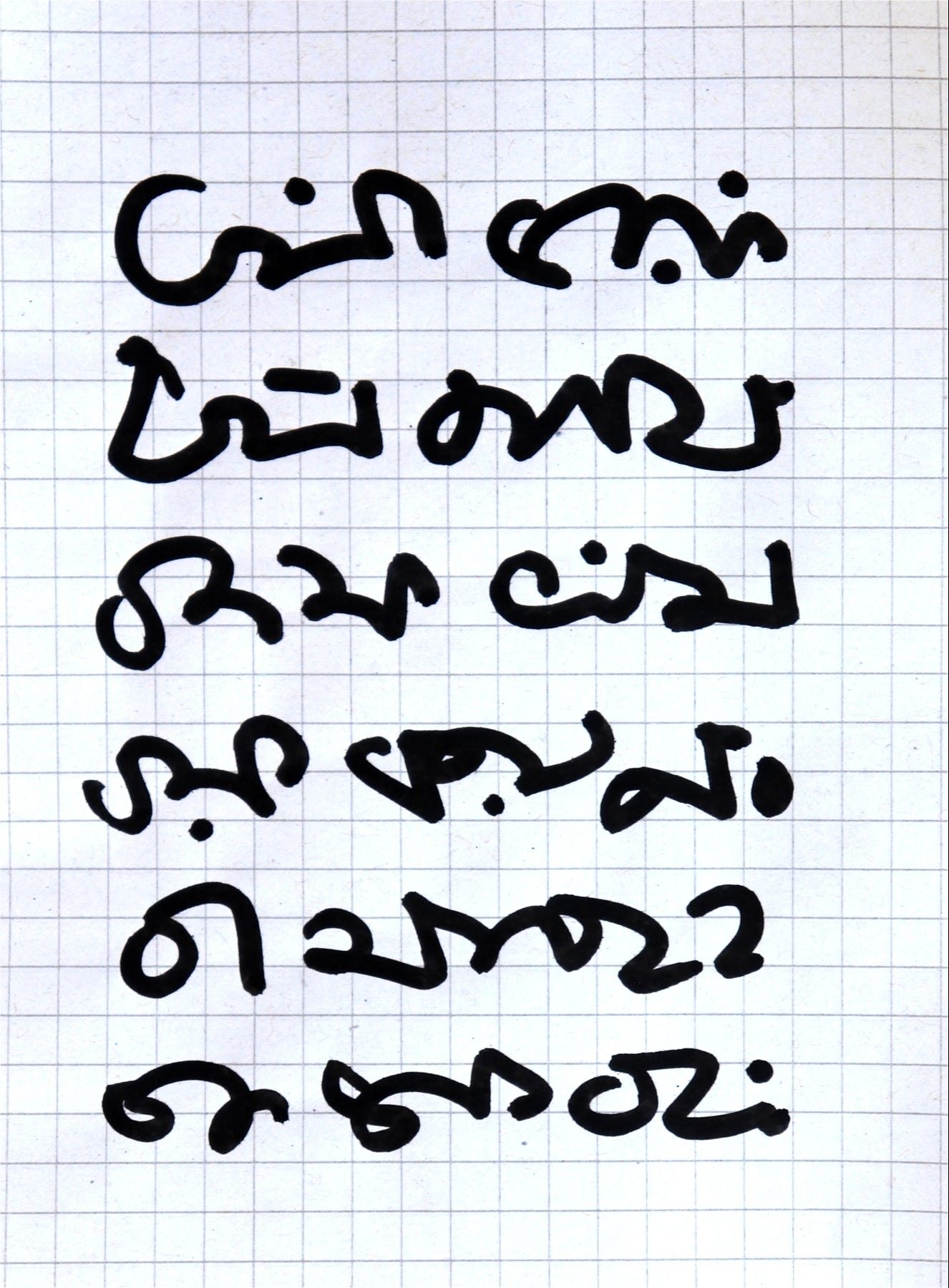
The Footprints in the Snow
Modern neuroscience has become remarkably adept at watching the brain work. Functional MRI scans reveal regions becoming active. Electrodes detect neurons firing in intricate patterns. Researchers can correlate measurable brain activity with memory, emotion, language, decision making, and perception. Every year these measurements become more sophisticated.
These discoveries are genuine achievements. The footprints in the snow are real.
But footprints are not the walker.
Imagine waking after a fresh snowfall and discovering a trail crossing an empty field. You can measure the depth of each print. You can calculate the length of the stride. You can determine the person’s weight, direction, and perhaps even whether they were carrying something heavy. Every measurement is meaningful and scientifically testable.
Yet none of those measurements explain the person who made them.
The footprints are evidence of a journey. They are not the journey itself.
In much the same way, neuroscience observes the measurable traces left by thought. Every idea, every memory, every feeling corresponds with neural activity. The instruments reveal the footprints that conscious experience leaves upon the brain.
But does that explain consciousness?
That is a very different question.
As artists we are constantly reminded of this distinction.
Someone may analyze the chemical composition of paint, the weave of the canvas, the speed of the brushstroke, or the electrical activity occurring in the artist’s brain while working. Every one of those observations may be perfectly accurate. They may reveal fascinating correlations.
Yet they do not explain why the painting came into being.
They do not explain the intuition that arrived without warning, the years of lived experience condensed into a single gesture, the mysterious sense that one mark belongs while another does not. They do not explain the silent conversation between artist and artwork that unfolds over hours or months until something finally says, “Yes, this is finished.”
Those experiences leave traces.
They are not identical to the traces.
This distinction appears throughout life. A musical score is not the music. A script is not the performance. A map is not the landscape. An archive is evidence of a partial history, not the activity itself. Every artifact points toward a living event that exceeds its own material form.
The measurable is indispensable. Without footprints we might never know anyone had crossed the field.
But if we mistake the footprints for the walker, we begin to confuse the evidence with the living flow of reality.
This is one of the enduring challenges of both science and art. Science becomes ever more skilled at measuring the traces of experience. Artists spend their lives dwelling within the experience that leaves those traces behind.
The two pursuits are not enemies. They are simply looking from opposite directions.
One studies the footprints.
The other is up ahead walking.
This reminds me of the story of the Centipede that goes something like this:
The Rhythm of the Meadow
A centipede named Koji was famous across the valley for his beautiful, sweeping movement. When he moved over the moss, his hundred legs rose and fell like waves on a lake. He never stumbled. He never hesitated. He simply walked, a living song of pure motion.
One afternoon, a grasshopper landed on a nearby blade of grass. The grasshopper was a logical creature, always counting his hops and calculating the angles of his jumps.
Watching Koji, the grasshopper became deeply fasinated. “Excuse me, friend,” the grasshopper called out. “I have only two legs, and still, keeping track of them takes constant work. You have a hundred! Tell me, when you begin to move, how to you keep track of so many legs at the same time? And how do you ensure the middle legs do not trip over the rear ones?”
Koji stopped. He looked down at his long body. He had never actually looked at his feet while walking.
“I... I am not entirely sure,” Koji murmured. “Let me think about it.”
Koji decided to start slowly. He focused all his attention on his front-left leg. He willed it to lift. Then, he tried to coordinate the tenth leg on his right to match the rhythm. Suddenly, his back legs felt heavy. His middle legs bunched together.
The more he calculated the sequence, the more chaotic his body became. Within seconds, Koji’s legs tangled like a ball of yarn, and he tumbled sideways into a patch of dry clover, completely paralyzed.
The grasshopper shook his head, adjusted his antennae, and chirped, “How tragic. A master of movement, yet you don’t even know what you are doing.” He then hopped away, proud of his own intellect.
Koji lay in the clover for a long time, frustrated and frozen. He tried to think his way out of the tangle, but every thought only made a different leg twitch awkwardly.
Finally, exhausted by the effort, Koji simply let go. He stopped trying to fix the problem. He forgot about the grasshopper. He closed his eyes and listened to the wind rustling through the grass, feeling the warmth of the sun on his back.
He forgot about himself - Koji the centipede. He forgot about his hundred legs.
A gentle breeze blew across the meadow. Without a single thought, Koji’s body responded to the cool air. His front legs moved forward, the next row followed, and the wave returned. Before he even realized he was moving, Koji was gliding smoothly through the grass again, leaving his thoughts behind in the dirt.
What a Taoist might say about this problem…
Look upon the centipede.
He does not study the art of walking, yet his hundred feet move in perfect harmony. He does not count his steps, yet he never stumbles. He does not command the legs, he simply allows the Tao to move through him. This is Wu-Wei - action without striving. He moves as water flows, yielding to the earth, filling every hollow without a thought of his own cleverness.
Then comes the grasshopper.
The grasshopper is proud of his sharp mind. He counts his hops. He measures his angles. He looks at the centipede and sees only a problem to be solved, a machine to be taken apart. He calls out, “How do you govern such a multitude? Which leg moves first? What is your secret design?”
Alas, the centipede listens. He steps out of the natural simplicity of knowing and enters the trap of knowledge. He looks down. He begins to calculate. He tries to manage what was already perfect.
And what happens?
In trying to be clever, he loses his virtue. In trying to control his hundred legs, they become a tangled web. He falls into the dirt, paralyzed by his own mind. Every thought becomes a knot; every calculation becomes a shackle. The grasshopper chirps in triumph and hops away, blind to the fact that his own intellect has just ruined a masterpiece of nature.
The centipede lies frozen. He tries to think his way out of the tangle.
Finally, exhausted, the centipede surrenders. He drops his cleverness. He forgets the grasshopper’s question. He forgets his hundred legs. He returns to the state of the uncarved block. He listens to the wind. He feels the sun. He returns to the stillness.
And in that stillness, the Tao returns. Without a single thought, his body remembers its nature. The first leg moves, the ninety-ninth follows, and he glides effortlessly back into the grass.
The world is a sacred vessel, and it cannot be improved by the analytical mind. If you try to tamper with it, you will ruin it. If you try to hold it, you will lose it. Trust the natural order.
Cultivating Inner Quietude

The purer the artist's 'mirror' is, the more true reality reflects in it. Overseeing the historical culture of art, we must conclude that the mirror only slowly is purified. Time producing this purifying shows a gradual, more constant and objective image of reality. ”
I love the story of the centipede. I know that if I wake up and think in detail about how I'll go about my day I'll freeze or get depressed at the overwhelming sensation of it all. But if I just get up and live in the moment of what I need/want to do I'm good. I was talking with this lovely woman at the gym this morning about connecting with certain individuals that we're unexplainably drawn to. I suppose if I thought about it I could give some reasons why I'm drawn to certain people, art, music, etc..........but that initial attraction to anything comes from something no words can describe as the reaction comes from a deep place where language doesn't exist.
As a psychiatrist it drives me nuts to read each new report about the functional MRI findings that confirm or prove the presence of a label ( ADHD, etc. ). As Cecil wisely writes, these are the traces- not a thing, not a fact, just a correlation, or just a hypothesis of something.
Tolstoy said something like " I noticed the crease of a woman's elbow " as part of the emergence of Anna Karenina. Thank you Cecil