


One in a Million
I began my gallery artist journey in the early 1980’s. That places me slightly off to the side of the actual sales floor, not in the center of the daily transactions, but close enough to observe patterns over time. From that vantage point, certain truths become obvious.
I often say that every art sale is a one-in-a-million event. When you pause to consider what actually has to align, the statement does not feel exaggerated. A work must first come into being at the right moment in the artist’s life. It must survive doubt, revision, storage, and selection. It must then pass through the hands and judgment of a gallery, be inventoried and shown, then seen by the right eyes, framed by the right context, and come before a viewer who happens to arrive, who is ready, financially, emotionally, and imaginatively, have space remaining on a wall and then say “Yes, I must have it.”
Even then, the timing has to be precise. The collector has to walk through the door on that particular day. The work has to be on the wall rather than in the back room. The conversation has to unfold in just the right way. Something internal has to click. Most works do not fail because they lack quality. They simply are waiting for that convergence.
This is why I think of art sales less as transactions and more as convergences. They are the outcome of many independent trajectories crossing briefly. Artist, gallery, object, collector, circumstance, mood, and time all have to agree, if only for a moment.
I usually follow this observation by saying, “Luckily, there are a lot of millions.” What I mean is that the art world operates on scale, longevity and patience rather than predictability. While any single sale may be statistically improbable, a sustained practice generates countless opportunities for this alignment to happen. Over years and decades, improbability becomes workable.
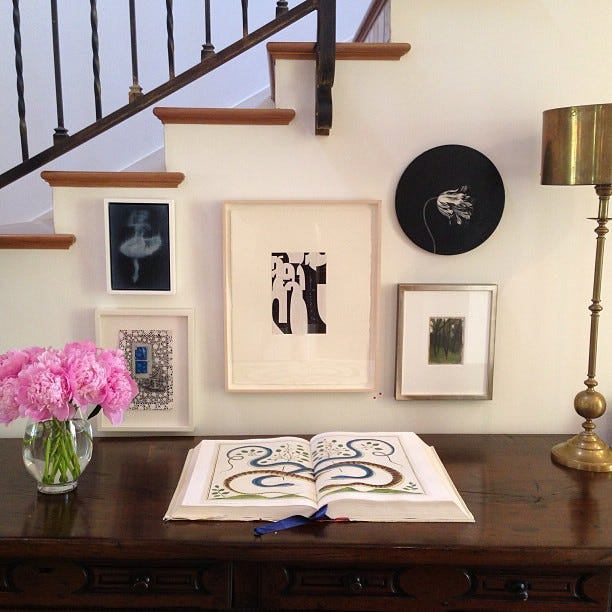
Seen this way, the market is not a referendum on worth but a slow-moving field of chance encounters. The artist’s task is not to attempt to force outcomes but to remain present, visible, and committed long enough for those convergences to occur. The work continues, the works accumulate, and eventually some of them find their way, nail to nail, onto a wall where they belong.
This is so right on. We looked years ago at beautiful outdoor sculptures at one of our wonderful art festivals. The artist was placed at the entry of the festival, likely because the art is large. We both saw the pieces one year, loved them, but the price was expensive. My husband was much more willing than me to buy a piece of this person's art. We went to this festival, probably 3-5 years later, and there was the same artist. The work was still beautiful. The work was still expensive. But, we found the perfect piece that we both agreed on as it called to both of us. It still amazes us and is placed in the center of our backyard. We both will regret the day we have to move into a high rise or senior living facility as we both don't want to ever give up our backyard and this beautiful piece of art.
I remember in my first year of art school, in one of the foundations classes a professor telling the class that all the stars had to align just right for someone to collect a piece of your work. That the pursuit was a long game and we all needed to be patient and just keep working on what we were passionate about - the creative process and the results, not being motivated by sales. To a bunch of kids between the ages of 18 and 22 it probably fell on deaf ears, especially since it came from an old guy that had to be at least 50. Here I am 40+ years later and that is the absolute truth. I could have created my greatest masterpiece but if the stars don’t align just right…