


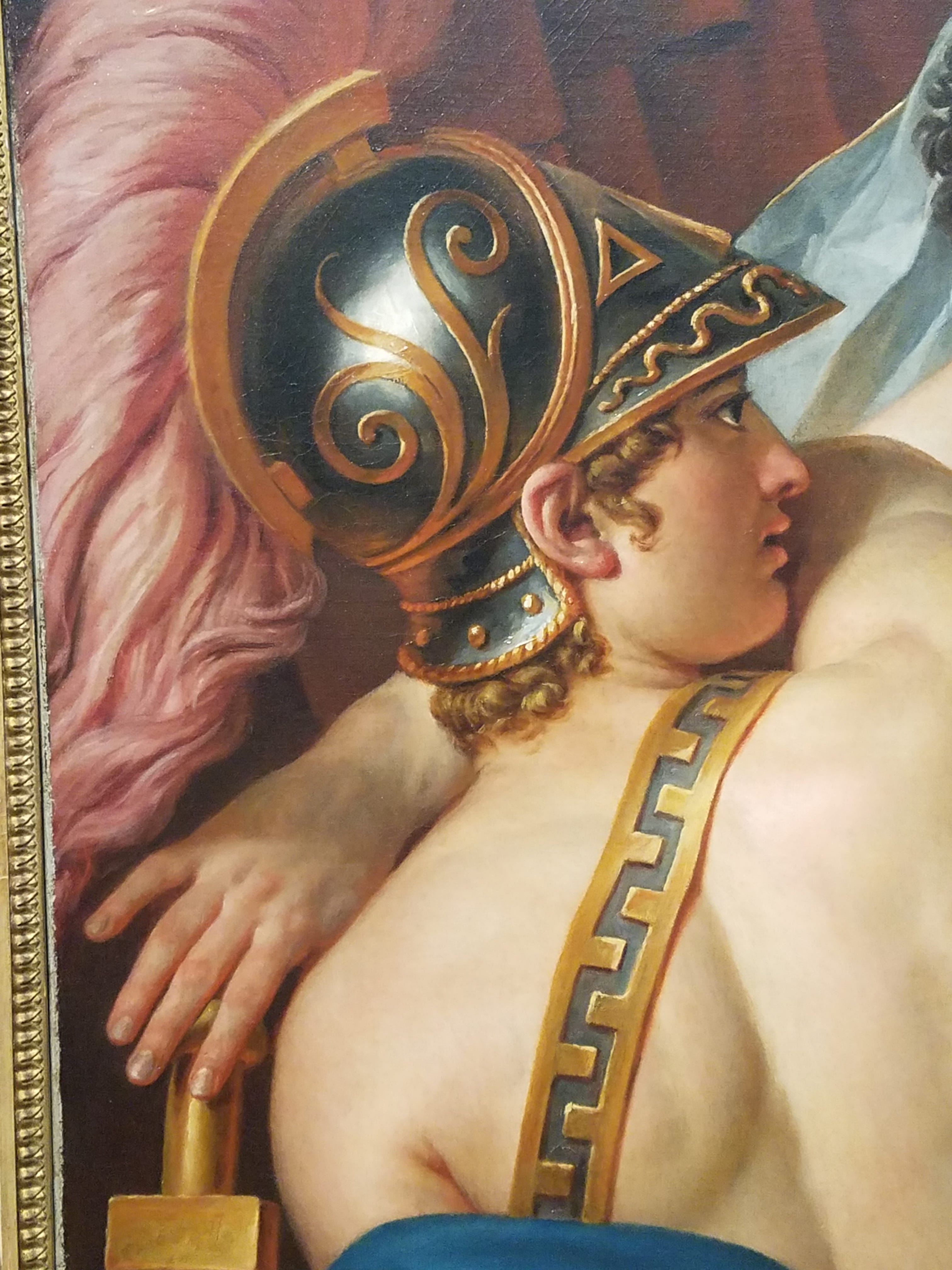
On the Making of the Canon
If the canon presents itself as a settled field, a landscape of established figures whose importance seems self-evident, it is only because the process that formed it has receded from view, leaving behind its results without the traces of how those results came to be, and when one looks more closely, what appears stable begins to reveal itself as the outcome of many small and ongoing decisions, each one carrying a judgment, often subtle, often unspoken, but cumulative in their effect.
There is no single body that declares the canon, no central authority that issues a final list, and yet the effect is not random, because a network of institutions, individuals, and practices participates in its formation, each contributing to the same narrowing process, critics writing, curators selecting, collectors acquiring, historians framing, educators teaching, and through this distributed activity certain works are repeatedly brought forward while others remain in the background, not excluded by decree, but by lack of sustained attention.
The comparison to sainthood begins to take shape not in formal criteria, but in pattern, because just as the recognition of a saint involves the accumulation of evidence, testimonies, and the confirmation of certain acts that can be recognized and verified within a shared framework, the canonization of an artist involves a series of validations that, taken together, begin to stabilize their position, not through a single decisive moment, but through repetition and reinforcement.
An artist is exhibited, then written about, then collected, then placed in relation to others, then taught, and each of these acts functions as a kind of confirmation, not absolute on its own, but strengthening the case through accumulation, so that over time the question of whether the work matters is no longer asked in the same way, because its importance has been demonstrated through its continued presence.
If one were to look for something like “miracles” in this process, they might not be supernatural, but they are events that signal a shift in perception, moments where a work is recognized as doing something that can be pointed to, named, and shared, whether that is a formal innovation, a conceptual break through, a new way of seeing, something that can be taken up by others and used as a reference point, and these moments become part of the narrative that supports the artist’s position.
But even here, the judgment is not purely about the work itself, because recognition depends on legibility, on whether what is being done can be seen as significant within the frameworks that are available at the time, and this introduces a subtle filter, because work that does not align with existing ways of understanding may not be recognized, not because it lacks depth, but because it does not yet have a language through which it can be received.
Rejection, in this sense, is rarely explicit, and this is what makes it difficult to locate, because it often takes the form of non-selection, of not being written about, not being exhibited, not being collected, and over time this absence accumulates in the same way that presence does for those who are included, creating a divergence that can appear to reflect intrinsic value, when in fact it reflects differential attention that supports the institutional narrative based on what has been collected into the archives.
There are also other judgments at play, quieter but no less influential, concerning coherence, consistency, the ability of a body of work to be seen as a whole, because institutions tend to favor what can be organized, what can be narrated, what can be placed within a lineage, and work that resists this, that remains diffuse, or shifts too unpredictably, may fall outside the patterns that are easiest to sustain.
Position matters as well, proximity to centers of attention, access to networks, the presence of advocates who can articulate the work within existing discourse, all of these factors contribute to whether the work enters the cycle of validation, and once within it, the process tends to reinforce itself, because each recognition makes the next more likely.
What emerges from this is not a fixed set of standards, but a field of tendencies, a set of conditions that make canonization more or less likely, without ever guaranteeing it, and within that field, the line between inclusion and exclusion is rarely sharp, more often it is gradual, a matter of accumulation or its absence.
To see this clearly is not to dismiss the canon, but to understand its formation as contingent and developmental, as something that could have taken other shapes under different conditions, and this understanding loosens its authority just enough to allow other perspectives to enter.
Because if canonization depends on the accumulation of recognition over time, then the absence of that recognition does not necessarily indicate the absence of value, only the absence of a particular sequence of events that would carry the work forward into wider visibility.
And in that recognition, the artist is returned to a different ground, one in which the work is not solely oriented toward passing through these filters, but toward forming its own coherence, its own continuity, its own record, which may or may not intersect with the structures that produce the canon, at least not yet, but does not depend entirely on them to exist as a meaningful whole.
And again, that returns us, quietly, to the archive.
Reading this essay made me think about another element as to why one artist gets that recognition over another and that has to do with eccentricity or the judgement call of "weirdness". One can see that happening in the music industry where the most outlandish personality gets the most attention....even if their music sucks or there's a strong lack of obvious talent........if it get enough attention via media or by other popular individuals, it/they become Known, sought after by those who think they're 'in the know' about what's avant-garde and "important". The over analyzing of art, music, dance as critics think they know what it's all about is "educating" the sheeple who have zero critical thinking for themselves as they listen to an assumed greater authority on said subject. Then, some of those sheeple will stare at an abstract piece of art and say the inevitable insipid comment, "My toddler can do better 'art'." As that comment gets ridiculed by those "in the know", that creates even more reverence for the growing popularity of an artist as people are afraid of exposing The Emperor's New Clothes" of anything slightly suspicious of being pretentious or bullshit. Thus another way how Canons get made.