


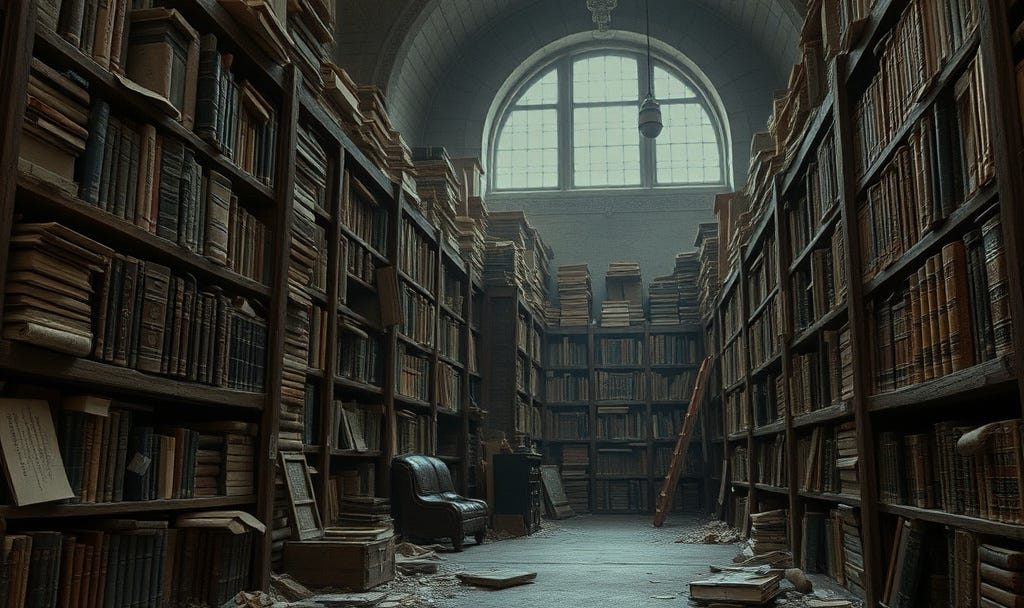
On Remembering, Forgetting, and the Shape of a Working Mind
Journal Entry: January 10, 2026
I have always been fascinated by Proust and the sheer expanse of his project ‘In Search of Lost Time’. At some point, curiosity turned practical and I bought a boxed set, not so much with the intention of reading it all carefully, but as a way of living near the idea of it. What intrigued me most was not the narrative itself, but the devotion it implied. The willingness to linger inside memory long enough for it to unfold completely.
Out of that curiosity, I tried a small experiment of my own. I wanted to see what it would take to write from recovered memory in a Proustian spirit, to take one simple, ordinary event and excavate it fully. I chose a lunch with my wife and daughter in Santa Fe. Nothing remarkable. Just an hour at a table. The next afternoon, I sat down and tried to recall it in as much detail as possible. What we ate, the light, the pace of conversation, the thoughts that drifted through my mind while listening and speaking.
I spent the entire afternoon writing about that single hour. The result was only several pages long, but the process was illuminating. It became clear very quickly that, given enough attention, an astonishing amount can be retrieved. Sensations, half-thoughts, emotional undercurrents, small shifts in awareness that would normally pass unnoticed all came back when given time and patience. The experience gave me a new respect for the kind of dedication it must have taken to sustain that depth of inward attention across an entire life’s worth of memories.
At the same time, the experiment clarified something about my own temperament. I do not usually work that way. In fact, I tend toward the opposite approach. I prefer to forget as much as possible. Not out of neglect, but out of trust. I assume that my deeper, intuitive self retains what matters and will bring it forward when it is needed. I do not feel compelled to carry my memories consciously. I would rather keep my mind as unencumbered as I can and meet each new moment without too much memorial baggage.
As an artist, this feels essential. I work experimentally and intuitively. I need to enter the studio with a fresh mind. I may follow a pattern or a line of inquiry for days at a time, but once it completes itself, I walk away from it. I do not carry it with me. I do not rehearse it or preserve it mentally. I move on to the next thing. This allows me to stay fluid, sometimes shifting between very different ranges of thought within the same day.
That fluidity feels important. It keeps the work alive. It prevents yesterday’s solutions from hardening into today’s assumptions.
Still, I do not dismiss memory. There is a richness of texture that remembered experience can lend to the present. Even when I am not consciously recalling the past, it informs how I see and respond. Perhaps memory, for me, works more like compost than archive. It breaks down quietly, feeds the soil, and supports whatever grows next without needing to be named.
My brief experiment in recovered memory did not tempt me to adopt a Proustian practice wholesale, but it did deepen my appreciation for what such devotion makes possible. It also confirmed why I work the way I do. Some artists move forward by remembering. Others move forward by letting go. Both approaches have their own discipline, their own demands.
What matters, I think, is knowing which one your work requires.
Forgetting and Remembering through Archiving
Journal Entry: January 10, 2026
Over time, this orientation toward forgetting led me naturally to the archive.
At first, that may sound like a contradiction. Why document so carefully if the goal is to let go? But for me, the archive is precisely what makes forgetting possible. To record something fully is to release it from the burden of being carried in the mind. Once it is documented, it no longer needs my attention. It has been acknowledged, placed, and given a form that can stand on its own.
Documentation becomes a surrogate for memory. Notes, photographs, objects, diary entries, dated works, organized files. Each one says, this happened, this existed, this mattered enough to be witnessed. Because of that, I am free to move on without anxiety. I do not need to rehearse the past internally because it has already been externalized.
In this sense, the archive functions as a kind of distributed consciousness. It holds what I no longer need to hold. It remembers on my behalf.
What emerged over years of working this way is something that began to resemble a parallel form of In Search of Lost Time, though arrived at through a very different route. Instead of long passages of inward contemplation rendered in language, my version takes shape through objects, fragments, annotations, sequences, and systems of organization. The memory is not reconstructed through prose alone, but through accumulated evidence of lived attention.
A collage saved, a notebook filled, a box labeled, a photograph dated. Each artifact carries a residue of its moment. Together, they form a textured record of time passing, not as narrative, but as presence. The archive does not explain the past so much as preserve its density. It allows the past to remain available without being intrusive.
This approach suits my working life. I do not want to live inside recollection. I want to work forward. The archive allows me to do that cleanly. It says, you do not need to remember this now. If you ever do, it will be here.
There is also something deeply grounding about this practice. It places trust outside the self. Trust in systems, in order, in the quiet continuity of record keeping. It replaces rumination with structure. Instead of asking my mind to hold everything, I give that responsibility to shelves, folders, boxes, and dates.
Over time, this has shaped how I understand memory itself. Memory does not need to be constantly accessed to remain alive. It can sleep. It can rest. It can exist as potential rather than insistence. When needed, it can be re-entered through the archive, not as a flood, but as a guided return.
In that way, the archive becomes a bridge between remembering and forgetting. It honors experience without trapping me inside it. It gives the past a place to live so that the present can remain open.
For my work, that balance feels essential.
Cecil, this was a quietly powerful meditation on memory, process, and the creative mind. I especially loved your line about memory working more like compost than archive—feeding the present in ways we often can’t see. The tension you describe between remembering and letting go feels so familiar. There’s something freeing about trusting that what matters will return when it’s needed. I’ve also found that letting go of certain experiences or projects can be just as vital as holding onto them, and that documenting something (through sketches, notes, or even just a quick photo) somehow frees me up to move on creatively. Your approach makes me think differently about what it means to document and why we do it—not just to preserve, but to make space for what comes next. Thanks for sharing this insight. It made me want to pay closer attention to both what I keep and what I let drift away.
Great essay as always. Memory is a strange and wonderful thing...both when it pops up unexpectedly via a smell or song even a deja vu or when purposefully digging around for a specific one to just relive or understand. I rarely do an art piece that's about a specific memory but there was one that HAD to be made, called "Mrs. Lurp's Purse". This woman from long ago when I was a kid.......a mother of one of my sister's friends. Such a weird character that re-emerged into my psyche one day so I made a piece about her. I love the piece a lot and feel it really captures the essence of who this woman was in my memory.