


On Photographing and Numbering the Work
Once the work is dated, the next step is to give it a form that can travel.
A physical piece exists in one place at a time. An image allows it to exist in many places at once - in your records, in a gallery’s files, in a collector’s consideration, in future publications. The photograph becomes the working proxy for the piece.
Because of that, it is worth treating documentation as part of the practice.
You do not have to photograph each piece the moment it is finished. In fact, it is often better to work in small batches. Every few days, or once a week, gather what has been made and document it all at once. This keeps the process efficient and consistent.
Once the images are made, they need to be brought into a system.
Each work should receive an inventory number.
There are many ways to construct such a system. Some artists prefer a single continuous sequence that runs across all media. Others divide by category - paintings, works on paper, collage, sculpture - each with its own numbering track. Either approach can work as long as it is consistent and clear to you.
One of the simplest structures is chronological by year.
For example:
2026.001
2026.002
2026.003
and so on, beginning again with a new sequence the following year.
This system has the advantage of immediate clarity. The number tells you when the work was made and its relative position within that year’s output.
Earlier in my own practice, I approached it differently.
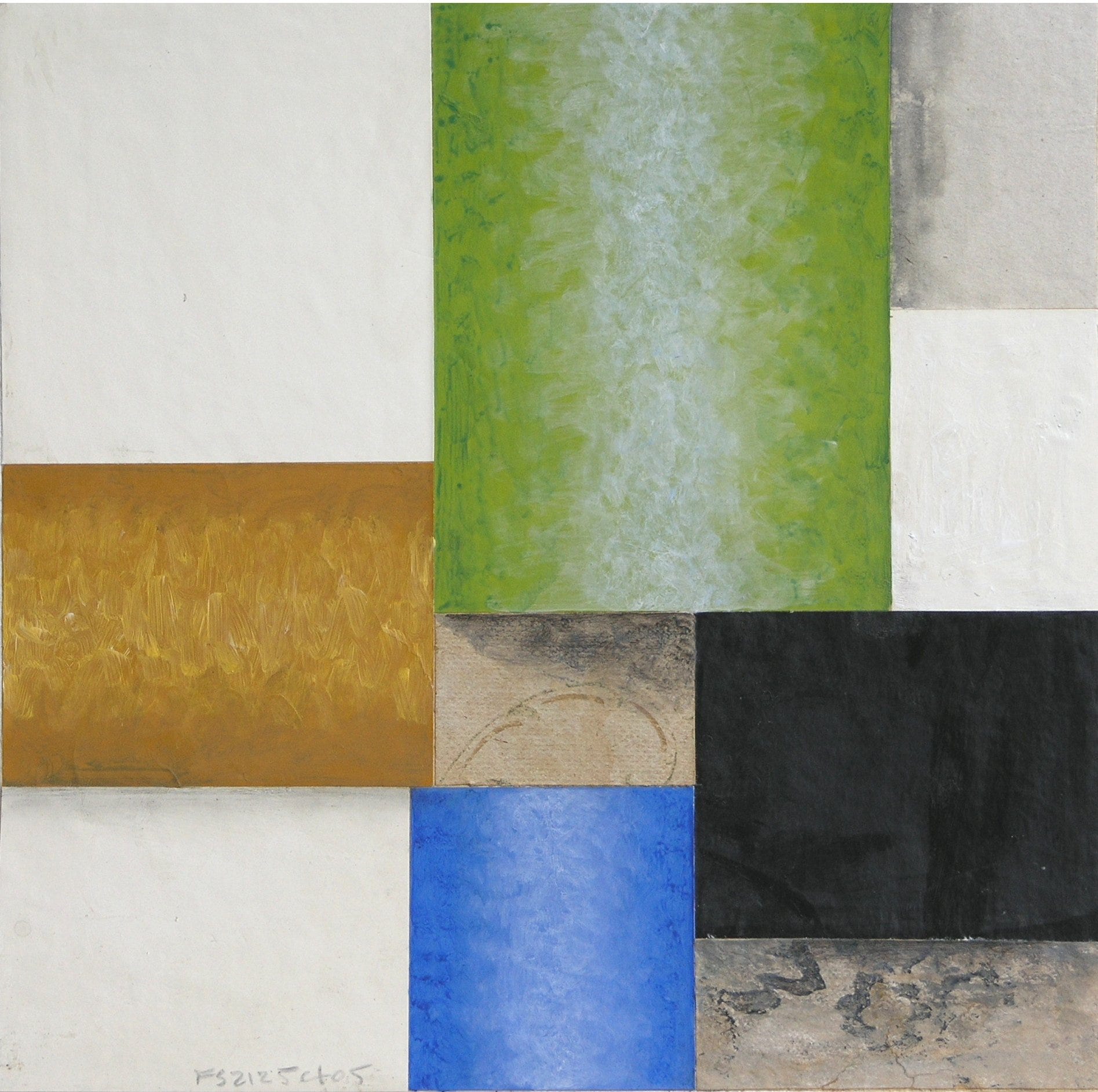
I was primarily concerned with what might enter a gallery, so I developed separate numbering systems based on series. My collages were part of what I called the Fusion Series. A typical inventory number looked like this:
FS325CT86
Fusion Series number 325, my initials, and the year 1986. The paintings followed a similar structure. The number carried compressed information - series, sequence, authorship, time.
I never titled the works.
The inventory number was the title. It functioned more like a specimen number than a poetic label. Each piece was an instance within a larger body, part of an ongoing investigation rather than a singular, named object.
Over time, my understanding expanded.
I realized that limiting inventory to only what might be shown or sold left too much unaccounted for. Sketches, studies, fragments, notes - these also belong to the record. What seems minor in the moment may later reveal itself as essential. And in some cases, works you never intended to sell will eventually find their way into the world.
So the rule became simple.
Everything that is not thrown away is inventoried.
This is not only about the market. It is about the integrity of your archive.
Early in an artist’s life, this may not seem important. The work feels immediate, present, easy to recall. But over years, and then decades, the volume increases. Without a system, the continuity begins to break down. Pieces are misplaced, misremembered, or disconnected from their context.
With a system, the work remains intact.
You begin to see your practice not as a series of isolated outputs, but as a continuous field. Each piece has a place. Each period can be understood. Each shift in direction can be traced.
In this sense, you become responsible for something larger than individual works.
You become responsible for your own archive.
You are, in effect, your own museum.
And like any museum, the value of what is held depends not only on what is there, but on how well it is cared for, documented, and made accessible.
This is why it is worth starting as early as possible.
You do not need a perfect system at the beginning. You need a consistent one. It can evolve as your practice evolves. What matters is that the habit is established.
From that point forward, everything you make has a place.
And nothing is lost to time.
Good system, but I would just HAVE to add a title of some sort to jog my memory, especially if I were a prolific artist like you. Even if the title is ephemeral.
2026.001 - It is What it is Until it Ain't)
2026.002 - Late to My Own Funeral
See, this would jog my memory. Is there a reason why you don't? Just curious..............
Such perfect organization. I got overwhelmed just thinking about what I have ahead of me to do. Last night I had finished my 190th piece since a few yrs ago when I started to create art again after a long absence. I had taken quick photos of some of the pieces but these photos were for sending to an ex-friend and not professional looking at all. Many years ago I hired a professional photographer and had a physical portfolio of the work. I'm so behind the times with making a website. The procrastinator in me shutters with what I know needs to be done. Ick.