


On Entrusting Your Work to a Gallery
There comes a moment, sooner or later, when an artist places their work into someone else’s hands.
It is a meaningful threshold.
Up to that point, the work has lived in the studio, under your care, shaped by your decisions, your pace, your sense of timing. Even if others have seen it, the responsibility has remained yours. When a gallery enters the picture, that responsibility becomes shared, and with that sharing comes a new kind of attention that is required of the artist.
It is easy, especially early on, to feel a sense of arrival when a gallery shows interest. The invitation can feel like validation, like a door opening. In that atmosphere, many artists relax too quickly. They assume that the dealer, by virtue of being in that position, is operating in their best interest.
Sometimes this is true. Often it is partially true. Occasionally it is not true at all.
The artist must remain awake.
This does not mean becoming suspicious of everyone. It means understanding that once your work enters the marketplace, it is subject to systems, personalities, and pressures that are not always visible from the studio. Your role shifts slightly. You are no longer only the maker of the work. You are also its steward in the world.
There are a few simple practices that form the backbone of that stewardship.
First, never rely on memory where a record can exist.
Every piece that leaves your studio should be documented. Title, size, medium, date, and agreed price. Not in a casual list, but in a clear, organized inventory that you maintain independently of the gallery. When work is delivered, both you and the gallery should acknowledge exactly what has been received. If something is sold, it should be recorded. If something is returned, it should be checked against your own list.
The record is not a formality. It is your continuity.
Second, be explicit about the terms of sale.
It is not enough to assume how things will work. Commission percentages, allowable discounts, payment schedules, and responsibilities for promotion should all be understood in advance. If a gallery wishes to offer a discount to a collector, is that within their discretion, or does it require your approval? When a piece sells, how soon is payment made to you? These are not delicate questions. They are necessary ones.
Clarity at the beginning prevents confusion later.
Third, remain in communication.
A gallery is not a sealed environment that you hand your work into and wait. Stay in contact. Visit if possible. Speak with staff. Often the people working the floor have a clearer day-to-day sense of what is happening than the owner. They see what people respond to, what conversations are occurring, what is moving and what is not.
Presence changes the dynamic.
It also communicates, quietly, that you are attentive. Not anxious, not intrusive, but engaged.
Fourth, participate in the life of the exhibition.
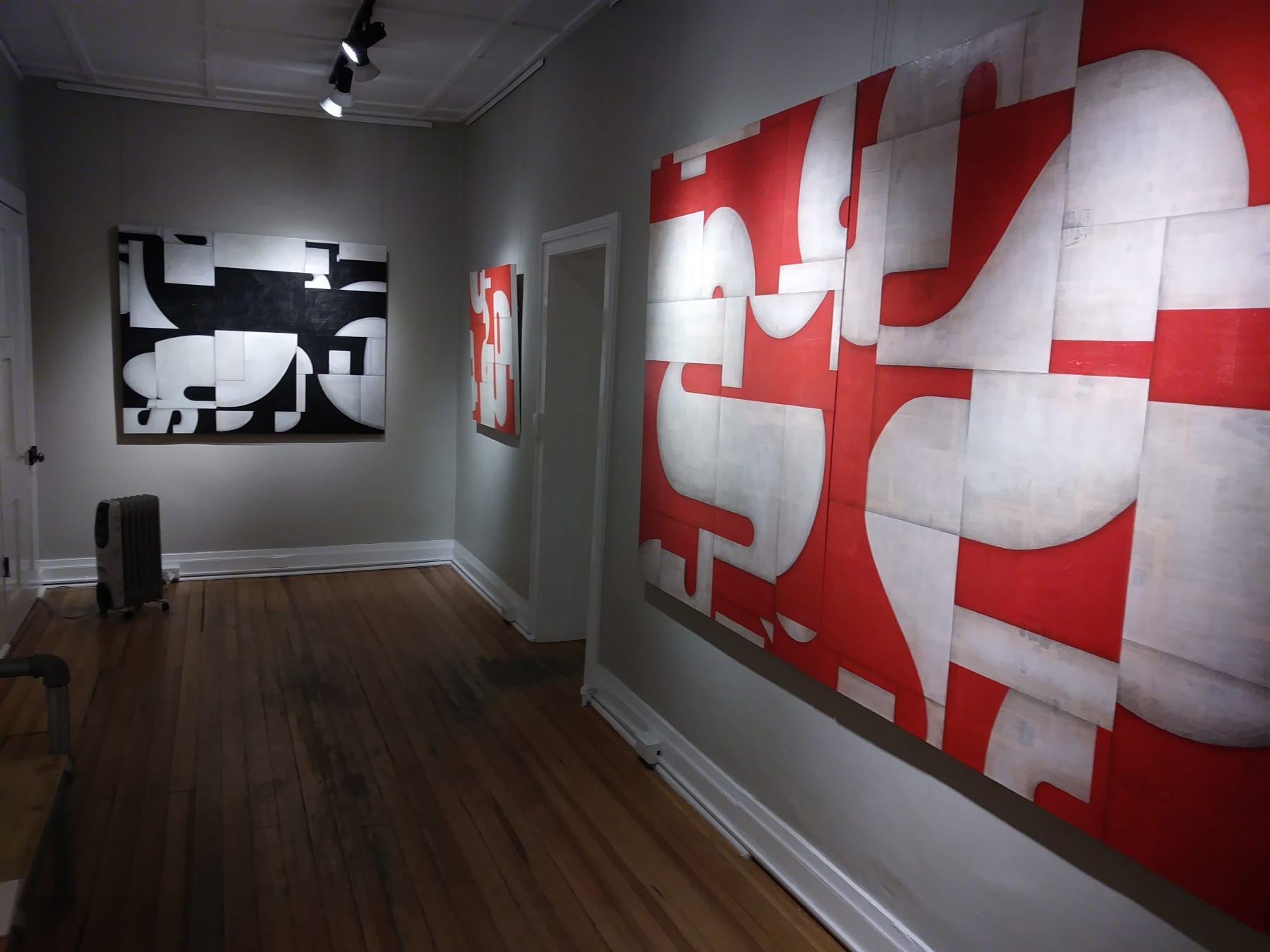
The hanging of a show matters. Placement, spacing, relationships between works - these shape how the work is perceived. Some dealers have a strong eye for this, and it is worth respecting when that is the case. Even then, your presence is valuable. The exhibition is not separate from you. It is an extension of your studio into a public space.
Openings, talks, small gatherings - these are not secondary. They are part of how the work finds its way into the lives of others. When possible, invite people yourself. Collectors, friends, those who have followed your work, those who are just beginning to encounter it. The gallery has a role in promotion, but it is not the only voice.
You are also a point of connection.
Finally, do not surrender your awareness.
There is a tendency, especially when someone appears confident, experienced, and personable, to defer completely. To assume they know best in all matters. Experience does matter, but it does not replace your responsibility to your own work.
Naivety is often visible. Those who operate without strong ethics can recognize it quickly.
Confidence, on the other hand, does not require aggression. It comes from being informed, organized, and present. It comes from knowing what you have made, where it is, and under what conditions it is being shown.
Most relationships between artists and galleries function well enough. Some are genuinely supportive and aligned. But the stories of things going wrong are not rare, and they tend to follow a similar pattern - lack of records, unclear agreements, and an artist who trusted more than they tracked.
The goal is not to become guarded in a way that closes you off.
The goal is to remain clear.
Your work has value. Not only in the marketplace, but as a record of your time, your attention, your life. When you place it into circulation, you are not giving it away. You are extending it.
Take care of that extension.
This is essential advice and so well presented. The gallery I worked with for two shows (before I became ill) was terrific. However, I wasn’t aware that they didn’t set a limit on the number of pieces someone could take home to try. One woman took five pieces at the opening and returned all five the next day. Ugh
This is one of the most important articles you have written for artists. You are right on the mark with all this information and artists must take heed to everything you stated here. I've seen first hand the unscrupulous ways of a gallery that thankfully is no longer in business because of the fraud he did against not only artists but buyers of art. Artists MUST take responsibility for their work from creation, inventory, and to the selling and collection of their own commission. Many galleries that have been around for decades are trustworthy but even then, leave no stone unturned regarding every aspect of your art in this environment. It can feel as if you're leaving your precious children in a place you've checked out thoroughly as well as all the staff that works there. Thank you for putting this valuable information out there!