


On Dating the Work
Every work begins in the studio.
But just as importantly, every work begins in time.
The moment a piece is completed, it enters a sequence whether you mark it or not. It sits somewhere in relation to everything that came before it and everything that will follow. If that sequence is not recorded, it slowly dissolves into approximation.
The simplest way to prevent that is also the most reliable.
Date the work on the day it is finished.
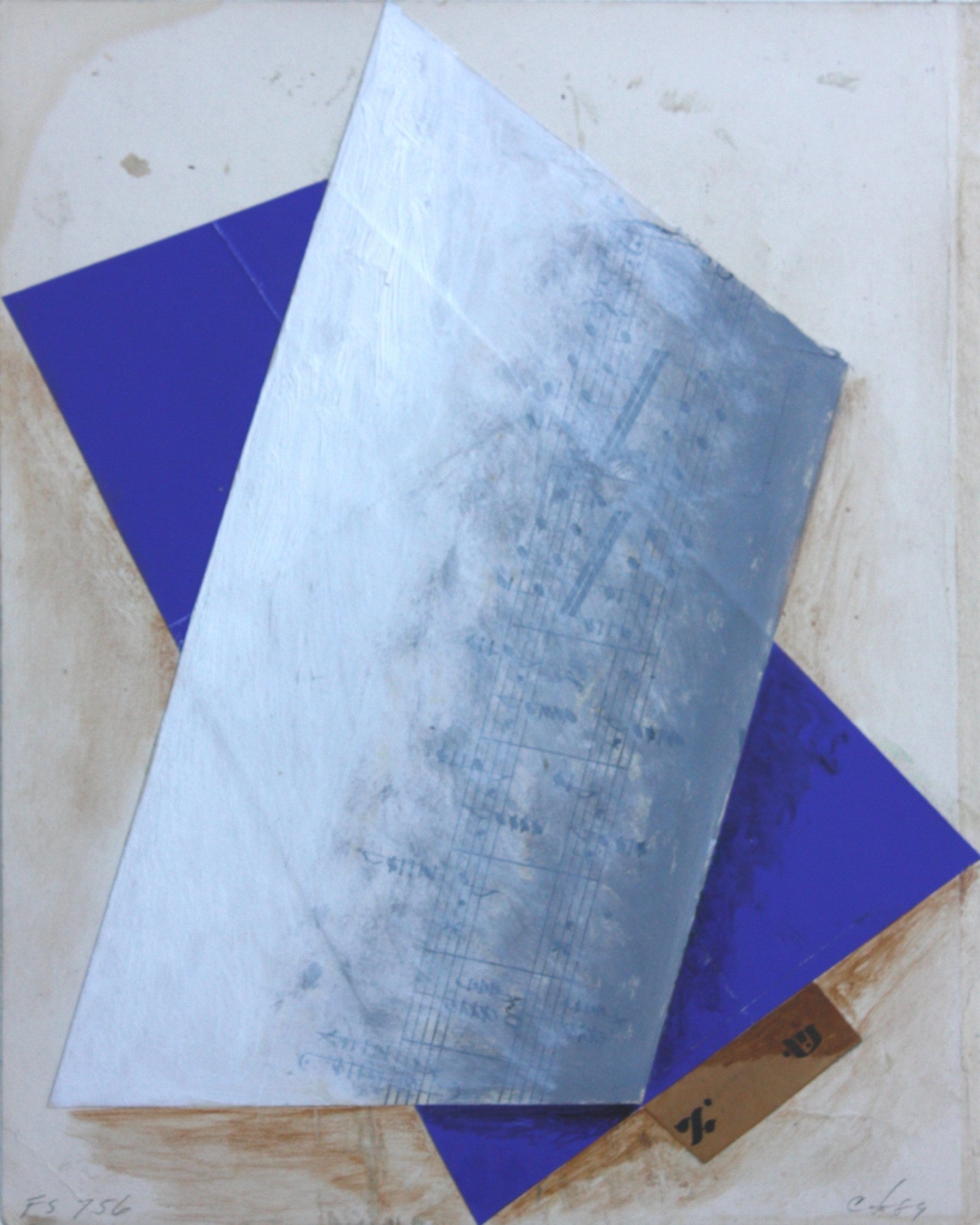
Write it directly on the piece when possible, or on the back, or in whatever manner is appropriate to the material. This applies not only to finished works, but to anything you are not discarding - sketches, studies, notes, fragments, experiments. Anything that remains part of your process belongs to the record.
The logic is chronological.
Chronology is the quiet structure that allows the work to remain intelligible over time. Without it, you may remember the general period of something, the feeling of when it was made, but not its exact place in the unfolding. Over years, that uncertainty grows.
With a date, the work holds its position.
If multiple works are completed on the same day, extend the system slightly. Add a simple numerical sequence. The date followed by 1, 2, 3, and so on, in the order they were made. This creates a precise internal ordering that requires no interpretation later.
It is a small gesture with long consequences.
Years from now, when you look back, the work will not appear as a loose collection of objects. It will read as a continuous movement. You will be able to see what came just before a shift, what followed a breakthrough, what clustered together in a certain period of attention.
This becomes especially valuable when others begin to engage with your work.
Collectors, curators, galleries - they often ask questions that depend on sequence. When was this made? What else was happening at that time? Are there related works from the same period? A clear chronological record allows you to answer immediately, without guesswork.
It also protects you from a subtle kind of loss.
Undated work can drift. It becomes harder to place, harder to contextualize, easier to overlook. Over time, it can detach from your own understanding of your development. Dated work remains anchored.
There is also something else at play.
To date a work is to acknowledge its completion. It marks the moment when the piece leaves the fluid state of becoming and takes its place as part of your body of work. It is a quiet form of recognition.
The act takes only a few seconds.
But those few seconds establish a structure that can hold decades of practice.
If you do nothing else in terms of organization, do this.
Everything that comes later - inventory systems, gallery records, sales histories - can be built on top of a simple, consistent chronological foundation.
Without that foundation, everything else becomes more difficult.
With it, the work remains clear.
Besides the title of a piece and my last name on it, I also the year on it like: '26. That's all I need/want and don't feel the need to put an actual date on it as for me, that specific information doesn't matter to me at all. I think in terms of years not months or days regarding when a piece of mine was done. But to each their own and whatever works and feel right is the key.