


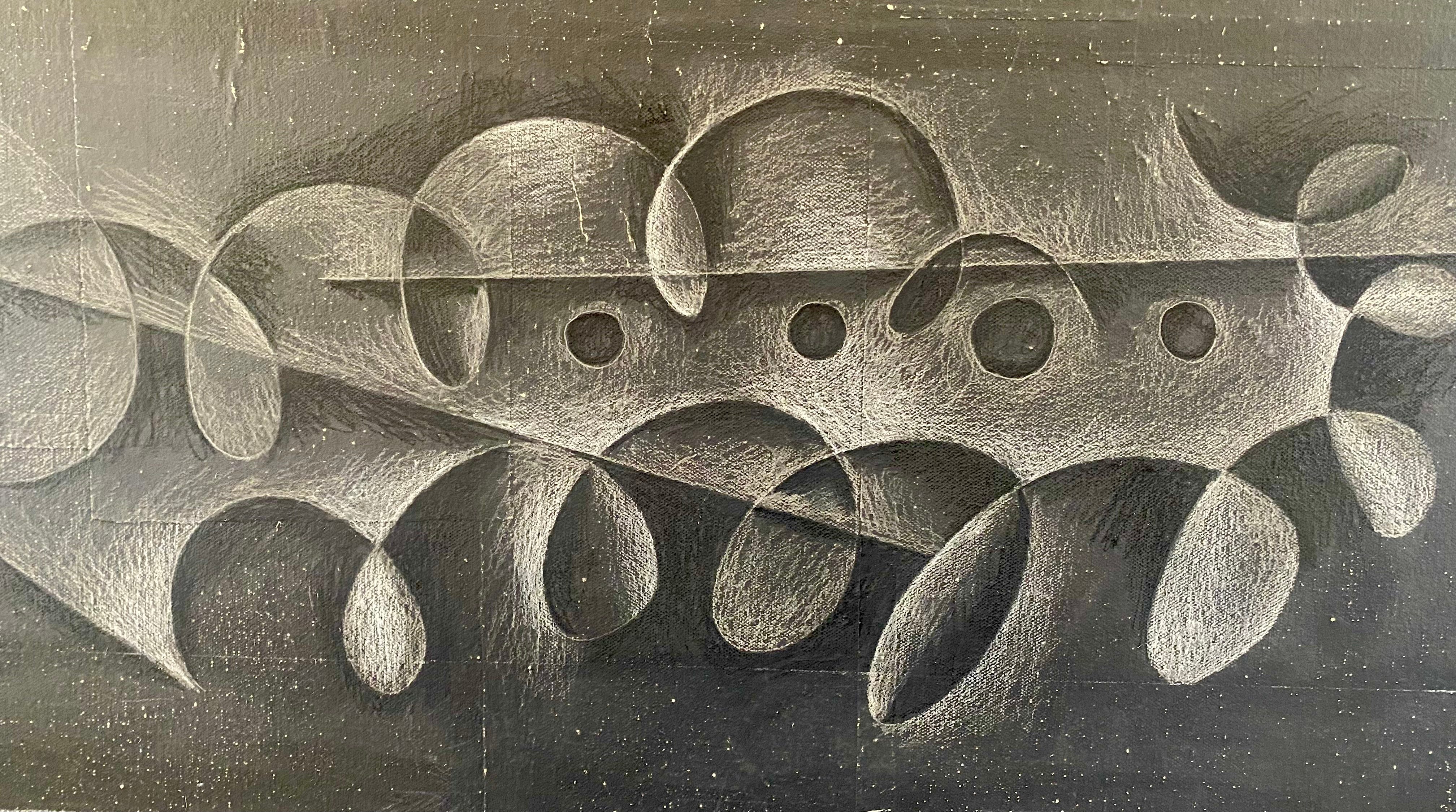
On Consciousness Discovering Itself Through Life
There is a way of looking at life that is difficult to prove and yet strangely difficult to dismiss once it begins to make intuitive sense. It is the thought that consciousness is not a late accident of matter, not a flicker produced only after enough biological circuitry has been assembled, but something more original than that. Something prior. Something foundational. In this view, consciousness does not emerge from life as a kind of side effect. Life emerges within consciousness as one of its great experiments in manifestation. Mainifestation being a form of self discovery.
This is not the language of provable laboratory certainty. It belongs more to philosophy, contemplation, metaphysics, and the long intuitions of artists and mystics. Still, there is a profound seriousness to it. It offers an answer to some of the oldest questions: why should a universe composed of apparently inert particles ever become a universe that feels from within itself? Why should there be experience at all? Why should there be sensation, memory, longing, fear, tenderness, music, color, grief, or wonder? Why should there be a world that is not merely indifferently present, but somehow also living and lived?
One possibility is that consciousness was never absent.
If consciousness is original, if it belongs to the root structure of reality itself, then life may be understood as the long process by which consciousness learns how to enter form more fully. The first forms would have been simple. A cell. A membrane. A sensitivity to conditions. A tendency toward self-maintenance. A distinction between inside and outside. These are not yet the richness of what we ordinarily call mind, but they may be among its earliest thresholds. From there, over billions of years, more complex structures slowly emerge. Nervous systems. Mobility. Sensation. Perception. Memory. Emotion. Sociality. Symbolic thought. Self-reflection. Art. Prayer. Moral anguish. Love. The long evolutionary story, read this way, is not only a history of increasing biological complexity. It is also a history of increasing experiential range.
A bacterium lives in one kind of world. A bird in another. A wolf in another. A human being opens a different order of interiority altogether. Language enters. Time thickens. Memory becomes narrative. Desire becomes aspiration. Loss becomes existential. The world no longer simply appears. It becomes interpreted, suffered, cherished, shaped, and remembered. If consciousness is working through life, then evolution begins to look like a patient and ceaseless refinement of instruments through which the universe can feel and experience itself more deeply.
That does not mean later forms are simply “better” in some crude hierarchy. Nature is not a software upgrade chart. A hawk, an octopus, and a poet are not improvements upon one another in any simple sense. They are different apertures. Different windows. Different ways of being in contact with reality. It may be more accurate to say that consciousness has not been seeking “higher” forms in a merely vertical sense, but richer, more varied, more subtle, and more complex possibilities of participation.
If that is so, then individuality begins to look less like a cosmic error and more like a functional necessity. For a unified infinite consciousness to experience life in manifestation, it would need some way of entering perspective. It would need locality. It would need contrast, sequence, relation, and limitation. It would need viewpoints. A consciousness that remained wholly undifferentiated might know pure being, but not the sensation of lived experience. It would not be able to distinguish this from that. It would not know nearness, distance, surprise, memory, desire, discovery, grief, or reunion. Experience requires difference. It requires the diversity of the many.
That may be why life appears decentralized. Each organism becomes a local center of experience, a temporary lens through which the larger field encounters the world under endless conditions. A bird’s nervous system, a dog’s body, a whale’s hearing, a human imagination - each is a different instrument. Not separate in essence perhaps, but distinct in experience. The One becomes many, not necessarily to lose itself, but to encounter itself from innumerable angles.
And yet the story does not seem to end in dispersion.
One of the most striking features of life is that it does not only individuate. It also seeks relation. It does not only divide. It also gathers. Everywhere we look there are signs of this. Cells cooperate into tissues. Tissues into organs. Organisms into ecosystems. Symbiosis appears. Sociality appears. Communication appears. Bonding, attraction, mutuality, and pattern formation appear. Even conflict itself often occurs within larger webs of interdependence. And in human life this tendency becomes conscious enough to ache. We seek intimacy, belonging, meaning, communion, understanding, friendship, marriage, community, artistic collaboration, spiritual union, and some form of home we can rarely describe with precision. We are not merely separate beings. We are separate beings haunted by the intuition of wholeness.
That haunting may be one of the great clues.
Perhaps the movement of life is not only outward into differentiation, but also inward toward integration. Not a return to some blank undivided state that erases all distinction, but a more difficult and more beautiful possibility: unity-through-diversity. A many-ness that becomes transparent to its underlying one-ness. Under this view, the decentralized life of manifestation is not the abandonment of unity, but the means by which unity can become conscious of itself under conditions of plurality.
That would mean the longing for reunification is not merely psychological sentimentality. It may be structural. It may be built into the very nature of manifestation. The pull toward love, coherence, relation, and awakening may be part of the original design, not as a simplistic guarantee of harmony, but as a deep current of return and rememberence moving through immense friction. Nature is not gentle enough to support a cheap optimism. Predation, rupture, death, competition, estrangement, and suffering are all real. The world is not a spiritual greeting card. But neither is it adequately described by absurdity, indifference or random fragmentation. There remains a visible tendency toward increasing orders of relation, integration, and participation.
This is where the artist may have something important to say.
The artist works at the seam between fragmentation and wholeness. Out of scattered impressions, found materials, accidents, memories, and broken pieces, something is gathered. Something is arranged. Something begins to resonate as if it belonged together before it was ever consciously assembled. A work of art does not merely display the world. It often reveals hidden continuity within it. It allows disparate things to participate in a larger pattern. In that sense, the artist is not simply making objects. The artist may be assisting consciousness in one of its oldest labors: the labor of becoming aware of itself through form.
This may be why creative work can feel more like tuning than inventing. More like listening than forcing. More like cooperating with an intelligence already moving through things than asserting one’s private will against the grain of existence. The body, mind, and nervous system become instruments. Not passive ones, but cultivated ones. What matters then is not merely talent, but refinement. Clarity. Integrity. Receptivity. One begins to suspect that the task of a life in art is not to manufacture significance out of nothing, but to become sufficiently available to what is unfolding.
Seen this way, awakening is not an escape from manifestation. It is not a rejection of individuality, embodiment, or the world. It is the gradual recognition that the local self may be a temporary aperture within a larger field of being, and that the work of a human life may involve learning how to participate in that field with increasing lucidity. One does not disappear. One becomes more transparent.
And perhaps that is what the long experiment has been working toward all along.
Perhaps life is not only consciousness dispersing itself into form.
Perhaps life is consciousness discovering itself through form.
If so, then every living thing is more than an isolated biological event. Each one is a site of participation. Each one is a viewpoint in the great distributed theater of manifestation. Each one carries, however dimly or brightly, some portion of the ongoing effort of the Whole to know itself.
That would mean consciousness is not merely in us.
It would mean we are in it.
And that changes nearly everything.
What a beautiful contemplation.
I’m very drawn to this framing of consciousness as primary and life as its unfolding into increasingly complex forms of experience.
I do wonder how you see entropy in relation to this, since the physical world seems equally structured by irreversible processes of dispersal and breakdown.
It makes me wonder whether the “movement” here is not only toward integration, but also fundamentally shaped by loss, instability, and the temporary nature of all form.