


A Google Alert, a Poet, and a Found Poem
A small and curious event occurred yesterday.
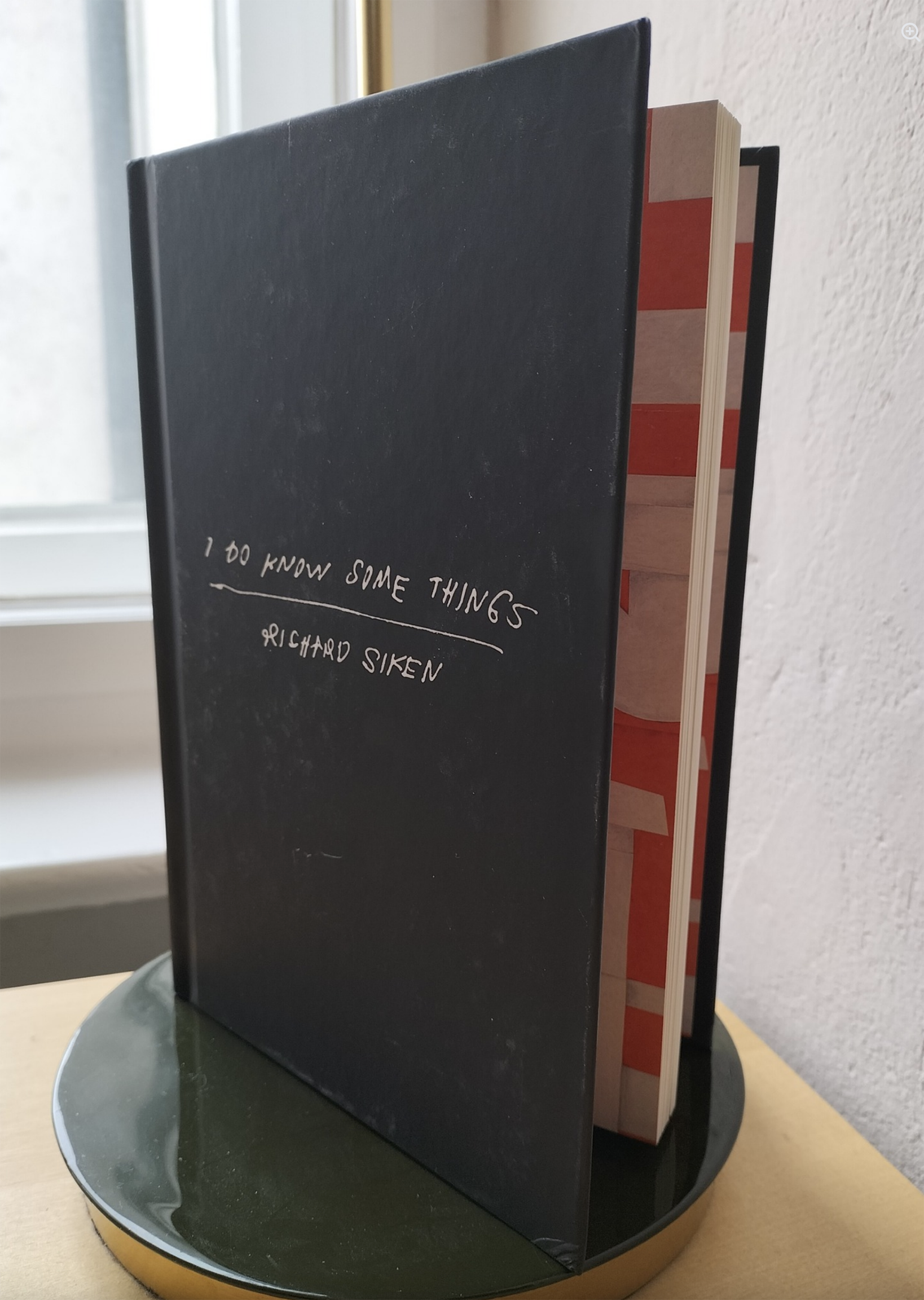
Some time ago, the poet/painter Richard Siken had his publisher acquire the rights to one of my paintings for the endpapers of his new book of prose poems, I Do Know Some Things, published by Copper Canyon Press.
The book is available here:
https://www.coppercanyonpress.org/books/i-do-know-some-things-by-richard-siken/
Yesterday, I received a Google alert for the term “cecil touchon.” This happens from time to time. Usually it is something archival, occasionally something unexpected. I followed the link to a review of Siken’s new book published at Public Seminar:
https://publicseminar.org/2026/02/review-richard-siken-i-do-know-some-things/
As is my habit, I began collecting phrases. Not from the poems themselves, but from the surrounding text: the review, the framing language, the contextual commentary. I do this almost automatically. It is a reflex born of collage practice. When language gathers in one place, I begin to see it as material.
I was not reading for argument.
I was not reading for agreement.
I was reading for charge.
So I pulled lines indiscriminately, without concern for authorship, tone, or attribution. A phrase here. A fragment there. Something that vibrated. Something that leaned toward another fragment across the page.
What emerged was not a summary of Siken’s book. It was not an interpretation. It was not even, strictly speaking, about him.
It was a found poem made from the atmosphere around the book.
This is something I have done for decades with printed matter: catalogs, newspapers, theoretical essays, exhibition statements, instruction manuals. I do not approach text as sacred territory but as a field. The field has currents. I move through them and gather what adheres.
There is a peculiar pleasure in encountering a poet I did not previously know through the peripheral language that surrounds his work. It is like meeting someone first by overhearing the conversations about them in another room. You form an impression from the echoes.
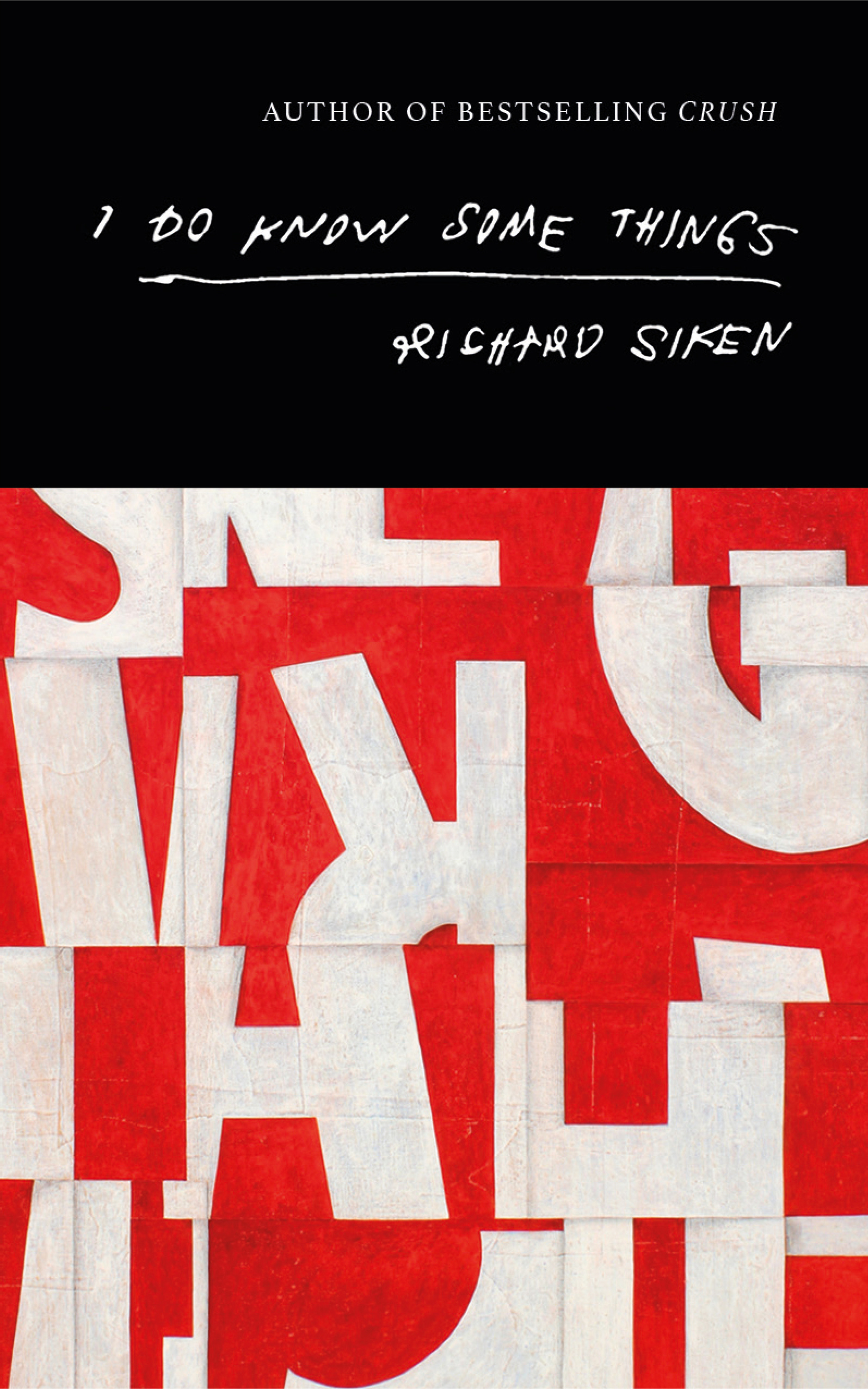
Originally the above was the proposed cover design using Post Dogmatist Painting #934 - 2017 - 60 x 48 inches - acrylic over paper on canvas but I told them they could use the image any way they wished for this UK edition of the book. They ended up deciding on using the image as the endcovers inside the book which I think is a lovely idea.
If you read the article you will see that this book comes in the aftermath of a debilitating stroke.
here is the paragraph that triggered the google alert:
“This attention to the visual is continued in the design of the new collection, which has a textured cover that feels soft to the touch, with the title scrawled on in a handwritten typeface. The tomato-red and eggshell-colored endpapers of artist Cecil Touchon’s “Typographic Abstractions” paintings are striking against the matte black cover. The painted collages of upside-down, layered lettering are a nod to Siken’s breakdown of language after the stroke.”
There is something quietly satisfying about this small chain of events.
A painter/poet I did not know uses one of my paintings in his book.
A review of that book triggers a Google alert.
The alert leads me to harvest language from the review.
The harvested language becomes a poem.
The work circulates.
The field recombines.
Nothing was planned.
Everything was available.
This is how collage thinks.
And perhaps this is also how poetry thinks.
Below is the poem that emerged from that exploration.
It may contain phrases written by Siken himself. It may not. I did not discriminate. I was collecting lines the way one gathers scraps for a collage - guided by rhythm, friction, and adjacency rather than citation.
Here is the collage poem.
swept clean of habit
I had forgotten the regular things
seduced by the lush desert.
looming presence cemented the feeling.
I would dwell endlessly
the idea that the only goal
allows for cognitive transformation.
images of circling, dredging, and burying,
I circled new darknesses
with a harrowing purpose.
the dizzying descriptive wanderlust
all the way to the end.
things we circle around,
things that keep us up at night.
the last thing on your mind,
a way back to language,
its proximities to death.
They grind against each other:
Then, he died. Then she did.
cascade in fragments.
What strikes me in this poem is the movement from seduction to mortality, from lushness to fragmentation. It begins with a clearing - “swept clean of habit” - as if ordinary consciousness has been stripped away. The “lush desert” suggests a paradoxical abundance inside apparent desolation, a space where familiar structures dissolve and something more elemental takes hold. From there, the poem circles downward. Circling, dredging, burying - these are motions of excavation and obsession. We orbit what unsettles us. We return to it. We circle again.
Midway through, the poem shifts from the solitary “I” to a shared “we,” widening the field. What begins as personal disorientation becomes collective human condition: the things we circle around are the things that keep us awake. The final turn brings language into proximity with death. The blunt sequence, “Then, he died. Then she did,” strips away metaphor and leaves only succession and loss. The poem collapses into fragments, as if acknowledging that when we approach what is most real - mortality, absence, the end of things - language can only cascade and break apart. What remains is not resolution but a charged awareness of how thought, desire, and death grind against each other.
The poem is the result of phrases I was attracted to but over all it seems to capture something of Siken’s journey. I am in the high desert of Albuquerque, NM and Siken lives down the road in the same desert further west in Tucson AZ. In the great southwest that’s called neighbors.
That's really cool poetry. 😎
And by the way, I just visited the gallery and noticed that this same painting is currently on view at Nuart Gallery in Santa Fe. more synchronicity.