

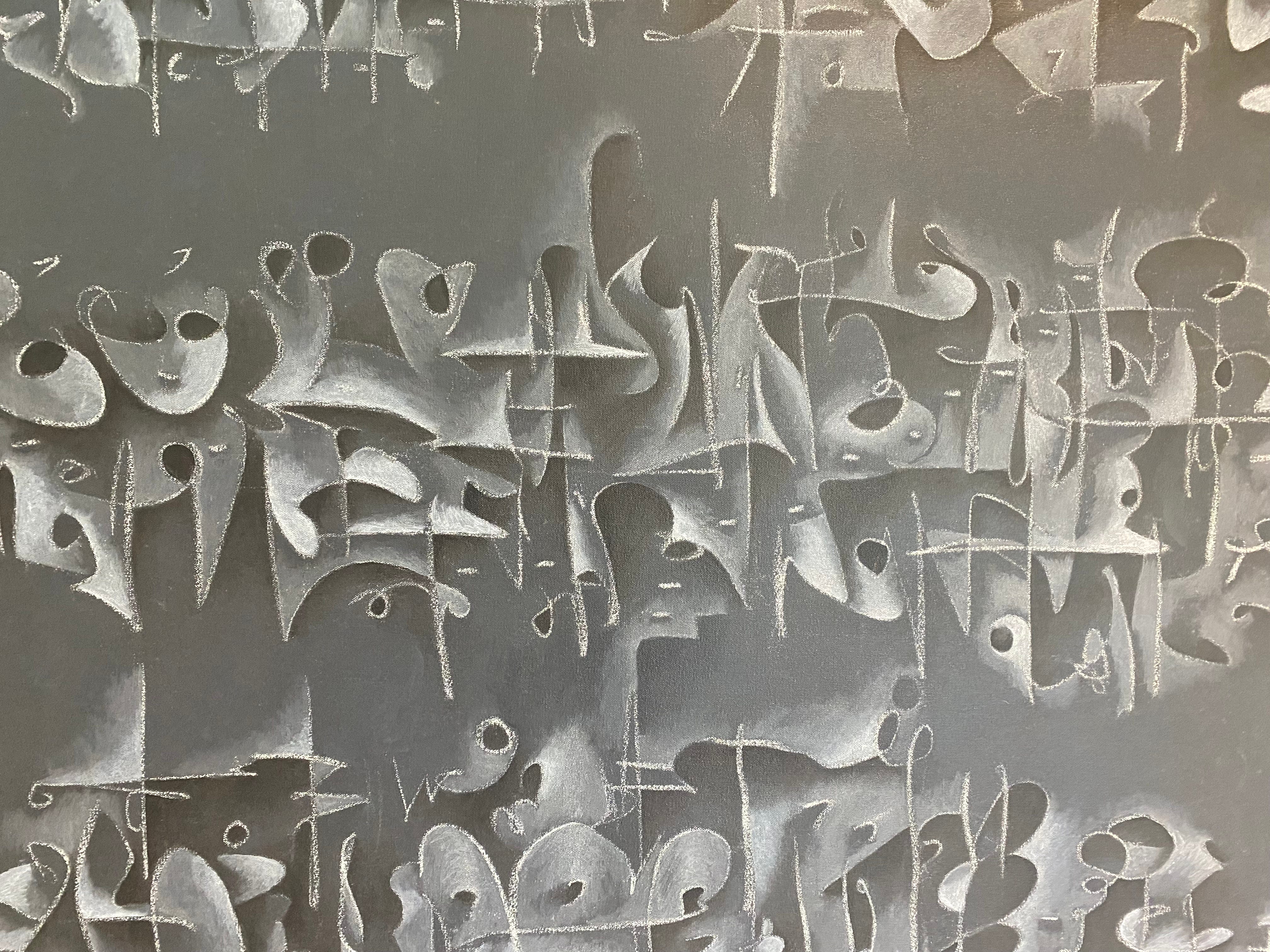
How to Tune the Instrument
If the artist is, in some meaningful sense, an instrument through which consciousness comes into clearer form, then the practical question becomes unavoidable: how does one tune the instrument? How does one become more available to the work, more capable of receiving it, shaping it, and carrying it through without unnecessary distortion?
This is where a lot of good ideas go to die. People become interested in inspiration, intuition, transmission, flow, vision, soul, spirit, or the great mysteries of creativity, but they do not want to talk about sleep, clutter, digestion, pacing, attention, emotional backlog, or the fact that a nervous system can only carry so much static before the signal begins to degrade. Yet these ordinary things matter immensely. They are not separate from the life of art. They are the life of art in one of its least glamorous but most consequential forms.
A tuned instrument is not necessarily a perfect one. It is a usable one. It does not need to be polished into some idealized state of spiritual wellness. It needs to be responsive, stable enough to hold charge, sensitive enough to detect subtlety, and clear enough that what passes through it is not immediately muddied by avoidable interference. The artist’s task is not to become flawless. It is to become playable.
The first and most obvious level of tuning is physical. This is not profound, but it is real. A body that is chronically sleep-deprived, overfed or underfed, inflamed, sedentary, or constantly overstimulated does not perceive in the same way as a body that has some measure of rhythm and care. The quality of attention changes. Emotional resilience changes. The threshold for frustration changes. One’s relationship to time changes. Small problems become existential. Fine distinctions become harder to detect. The work itself may still happen under these conditions, but it often happens with more drag and less grace.
There is no universal formula for bodily care because each person’s instrument has its own temperament, thresholds, and needs. But every serious artist benefits from becoming a close observer of their own usable conditions. When do I think best? When do I drift? What foods sharpen me, and which dull me? What kind of movement opens the channel rather than exhausting it? What amount of solitude restores me, and what amount becomes stagnation? These are not self-help questions. They are studio questions. They belong to the craft.
The same is true of environment. Physical space affects mental space far more than many people admit. A studio, desk, room, or work corner need not be immaculate, but it should support contact. There is a difference between fertile disorder and psychic congestion. One kind of mess contains active life. The other leaks energy. One invites work. The other quietly postpones it. The artist eventually has to learn the difference.
A useful space does not need to be expensive or photogenic. It needs to be available. It should make beginning easier. It should reduce friction between impulse and action. The notebook should be within reach. The scissors should be where they belong. The page should not require a ritual of excavation before it can be touched. If every work session begins with ten minutes of low-grade irritation because the basic tools are buried beneath irrelevant debris, the instrument is being asked to perform under unnecessary resistance. That may sound small, but over the course of a life it matters enormously.
Then there is the matter of attention, which may be the most important tuning factor of all. The modern world is designed to fragment attention and monetize that fragmentation. It rewards interruption, novelty addiction, and low-grade cognitive scattering. It trains the mind toward compulsive checking, partial presence, and habitual surface-skimming. This is not merely inconvenient for artists. It is corrosive to the conditions under which deep work becomes possible. A person cannot live in constant interruption and expect subtle perception to remain intact.
Attention is not only a mental resource. It is a mode of relationship. How we attend to the world around us determines what of the world becomes available to us. A hurried mind sees one kind of world. A patient one sees another. A cynical attention and a receptive attention are not observing the same reality. The artist, if serious about tuning the instrument, must become a steward of attention. That may involve practical disciplines that are not romantic but are highly effective: leaving the phone in another room, setting uninterrupted work intervals, protecting morning hours, limiting the amount of trivial input one allows into the mind, and refusing the fantasy that one can remain creatively porous while continuously bathing in digital static.
This does not require monastic withdrawal from modern life but it deas require the development of inner quietude. It requires selectivity. It requires enough respect for one’s own perceptual field to stop handing it over indiscriminately to valueless noise. One does not need to become a hermit. One does need to stop acting surprised when a mind treated like a pinball machine fails to produce sustained insight.
Emotional life is another major part of tuning, and one that many artists either overindulge or neglect. Some people romanticize emotional chaos as if suffering automatically deepens the work. Others try to become so regulated, emotionally cloistered, or professionally composed that they lose access to the living charge beneath the surface. Neither extreme is especially useful. The artist needs feeling, but also containment. Sensitivity, but also ballast.
To tune the emotional instrument means learning how to remain in contact with experience without being overwhelmed by it. It means recognizing one’s recurring distortions. It means knowing the difference between genuine intuition and a nervous system hijacked by fear, resentment, vanity, envy, or despair. It means not confusing emotional intensity with truth. Some of the strongest signals arrive quietly. Some of the loudest feelings are simply old weather blowing through.
This is one reason some form of inner housekeeping is helpful. That could mean journaling, contemplative practice, long walks, prayer, therapy, silence, martial arts, gardening, chopping wood, or staring into the middle distance until the mind untangles itself. The method matters less than the function. The point is to have some reliable means of processing what accumulates so that one is not dragging an entire unresolved backlog into every creative encounter. Untended emotional residue often enters the work not as depth, but as blur.
Reading also tunes the instrument. So does looking. So does listening. The artist should live in the presence of strong work, not to imitate it in a derivative way, but to remain in active relation to standards of vitality, structure, subtlety, and force. Good work recalibrates perception. It reminds the body-mind what aliveness feels like in form. It refreshes one’s sense of possibility. It also exposes mediocrity, especially one’s own, which is healthy if one can survive the sting without melodrama.
But here too there is a matter of balance. One must take in enough nourishment to stay fed, but not so much that one loses contact with one’s own interior movement beneath the noise of everyone else’s voices. Reading, listening, and looking should fertilize the field, not bury it. The artist has to learn when to absorb and when to withdraw. When to study and when to stop studying and make something with one’s own hands.
There is also the matter of rhythm. Creative people often fail not because they lack inspiration, but because they have no durable rhythm. They work in bursts, disappear into avoidance, overexert, crash, then become suspicious of their own inconsistency. A tuned instrument benefits from regular contact. Not necessarily endless hours. Not always heroic effort. But regularity matters. Better to maintain a living thread than to keep tearing the loom down and rebuilding it every few weeks.
This is where the humble discipline of showing up becomes much more valuable than its clichés would suggest. A regular relationship with the work trains the system. It reduces the drama of beginning. It keeps the channel open. It lets the unconscious know that it will be met. It makes creativity less dependent on ideal moods and more woven into the actual structure of life.
And perhaps that is the real heart of tuning: reducing the gap between the life and the work.
A great many artists unconsciously split themselves in two. There is the “creative self,” who appears in special conditions under proper lighting, and then there is the ordinary self, who trudges through errands, dishes, paperwork, conversations, moods, fatigue, obligations, and the low-level absurdities of being alive. But if consciousness is primary and life itself is the field of participation, then this split begins to weaken. The ordinary day is not the enemy of the work. It is often the source material, the testing ground, and the means of embodiment through which the work acquires its density and truth.
To tune the instrument, then, is not only to prepare for making. It is to live in such a way that one remains increasingly available to what is already moving through the day. To notice. To catch. To retain. To discriminate. To feel the difference between signal and noise. To know when something has charge and when it is merely passing mental exhaust.
This kind of tuning does not happen once. It is ongoing. The instrument drifts. Life accumulates. Noise returns. One loses the thread, then finds it again. This is normal. The point is not to achieve permanent perfect attunement. The point is to become skillful at returning and retuning.
That may be one of the defining marks of a mature artist - not uninterrupted brilliance, not flawless discipline, not spiritual radiance glowing from the pores, but the ability to notice when the instrument has gone out of tune and to patiently bring it back into relation.
That is enough to build a life on.
Not every day will feel inspired. Not every work session will feel charged. Not every season will feel fertile. But if the instrument is being cared for, protected, sharpened, and kept in a working relationship to the source of the work, then over time something reliable begins to form. A current. A continuity. A way of being available.
And in the long run, that is worth more than flashes of glamour.
Because the artist’s real power may not lie in intensity alone.
It may lie in sustained receptivity.
And that, like any fine instrument, must be kept in tuned.
That was a lot to read and comprehend for me but then, I'm tired and need a nap....speaking of treating the instrument well. For me, it's not about being in the mood to create, but all of me or most, has to be willing as I can ignore the little things that may be bothering me. I also need to take advantage of when it's all working just right and go and make art and sometimes that's in the middle of a sleepless night where ideas were twirling around in my brain. I've joined a gym a few months ago and have been working out regularly with a trainer and that has helped me feel/do better in all aspects of my life. My head seems clearer as do my abilities to do fine work that used to have my hands shake some. Excellent article as usual.