


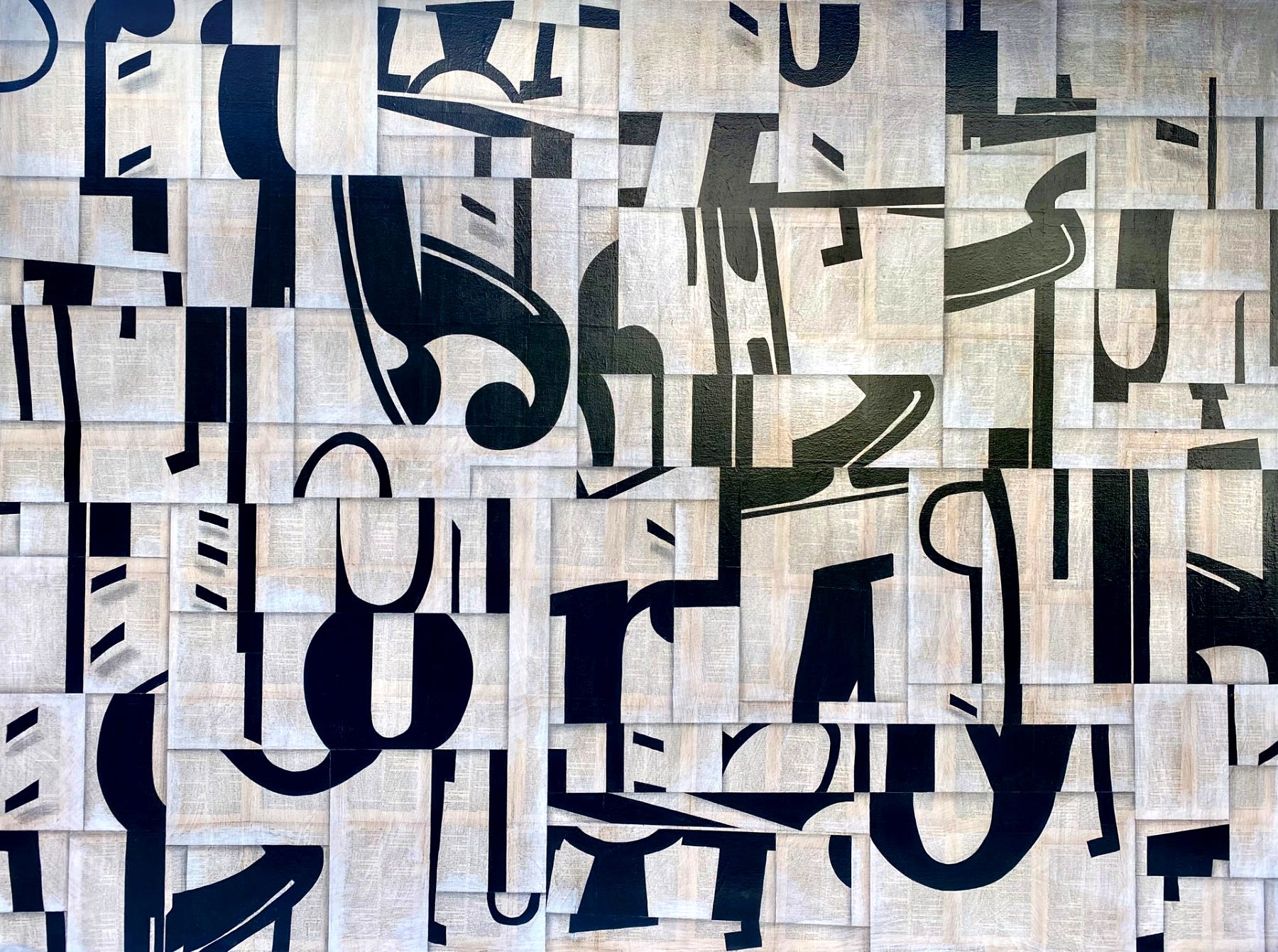
Beauty as Evidence of Alignment
Beauty has become a difficult word.
In many contemporary contexts it is treated with suspicion, embarrassment, or condescension, as though it were either too soft to be taken seriously or too compromised by commercial prettiness to still possess any real depth. In some circles beauty has been reduced to surface appeal, decorative finish, or the polished face of things designed to flatter the eye while asking nothing of the soul. In other circles it is regarded as ideologically suspect, a relic of old hierarchies, bourgeois comfort, or aesthetic naïveté. One is often encouraged to distrust beauty before one has even had a chance to encounter it properly.
This seems to me a serious mistake.
Not because every beautiful thing is profound, and certainly not because all art should aim toward prettiness or grace in any simplistic sense, but because beauty, rightly understood, may be one of the most important clues we have that something is in meaningful relation to itself. Beauty, in its deeper register, is not merely ornament. It is not merely visual charm. It is not even necessarily pleasant. Beauty may be one of the ways alignment becomes perceptible.
That is a much more useful way to think about it.
If consciousness is primary, if life is not simply random machinery but an ongoing field of manifestation and participation, then beauty begins to look less like a cultural luxury and more like a structural event. Something lines up. Something resonates. Something in the arrangement of form, relation, proportion, timing, energy, or presence reveals a degree of coherence that is not merely imposed from outside but felt from within. One senses, however briefly, that something is where it ought to be in a way that exceeds explanation.
It may not be final proof of anything, but it is not trivial either.
I have increasingly come to think of beauty as having at least two related qualities: elegance and internal integrity.
Elegance, as I mean it here, is the quality of being pleasingly ingenious by the simplest method. It is not merely simplicity, and it is not minimalism for its own sake. It is the exactness of a solution that arrives without waste. Nothing extra. Nothing forced. No clumsy over-explanation. No unnecessary gesture. The thing has found the most direct and sufficient means of becoming itself. It does not feel thin or reduced. It feels right with economy.
That matters enormously in art.
A beautiful sentence often turns by the simplest necessary hinge. A beautiful image may carry extraordinary depth through very few elements or gestures. A beautiful piece of music may resolve by a move that feels both surprising and inevitable. A beautiful structure often seems obvious after the fact, but only because it has arrived so elegantly that the labor of its making has disappeared into the rightness of its form.
That is one half of it.
The other half is internal integrity - the state of being whole and undivided.
A thing becomes beautiful, in part, when it feels coherent from within. When it is not patched together from conflicting motives. When it is not trying to be five things at once. When its parts belong to the same living necessity. When it is inhabiting itself fully.
That is a very particular feeling.
One senses that the work has arrived not merely assembled, but whole.
The phrase I have often used for this is that it looks like it “fell from the sky whole.”
That does not mean it was made without effort. In many cases it may have taken years, revisions, failed attempts, wrong turns, and a great deal of quiet labor. But when the thing is finally right, it no longer feels constructed in a strained way. It feels discovered. Received. Internally complete. It has the strange authority of something that did not merely get built, but arrived.
That feeling should be taken seriously.
Because beauty often announces itself not first as theory, but as recognition. One feels it before one fully understands it. A line lands. A phrase opens. A shape holds. A room feels right. A gesture has grace. A face in old age carries a weathered radiance. A branch moves in the wind with such exactness that one feels, for a second, the world is not merely happening but expressing. Something in us recognizes that relation before we can fully account for it.
That is why beauty can feel so intimate and so impersonal at once.
It is intimate because it touches us directly. It is impersonal because it often seems to exceed our preferences. We may like many things. We may be attracted to all sorts of surfaces. But beauty, in the deeper sense, carries a kind of inevitability. It gives the impression that some hidden order has briefly become visible without becoming mechanical. It is not dead symmetry. It is living fit.
That distinction matters a great deal for artists.
Because if beauty is reduced to prettiness, then the artist either begins decorating the world with agreeable surfaces or rejecting beauty altogether as a form of dishonesty. Both are dead ends. The first produces empty refinement. The second often produces a culture of deliberate abrasion in which vitality is confused with ugliness, and seriousness is measured by one’s willingness to make work that seems allergic to delight, proportion, grace, or coherence.
But beauty, properly approached, is neither cosmetic nor cowardly.
Beauty can appear in sorrow.
It can appear in severity.
It can appear in fracture, austerity, weathering, and ruin.
It can appear in what is broken but still rightly held.
It can appear in old wood, worn hands, stripped language, honest grief, and the exact placement of a single object in an otherwise empty room.
Beauty is not the absence of difficulty.
Beauty is what happens when difficulty enters meaningful relation.
That is a much harder and much more interesting thing.
One might even say that beauty is not the denial of entropy but a form of local coherence arising within entropic conditions. The world, as we encounter it physically, is always in the process of dispersal, breakdown, and reconfiguration. Things age. Structures collapse. Matter changes state. Time wears through surfaces. Systems unravel. And yet within all of that, beauty still appears. Sometimes more intensely because of it. The crack in the ceramic. The fading pigment. The softened edge. The scar that has become part of the face. The old voice carrying truth with less force and more weight.
In such moments beauty does not announce perfection in the sterile sense.
It reveals fidelity.
Something has remained in right relation through the weather.
This is one reason beauty and truth are often more closely related than modern habits of thought allow. Not because beauty guarantees truth, or truth always appears beautifully, but because beauty often signals that some form of inner coherence is present. Something is not merely functioning. It is fitting. It is not merely assembled. It is integrated. It is not merely there. It is inhabiting itself well.
That phrase may be useful too.
Beauty is often what results when something is inhabiting itself well.
A tree bent by decades of wind may be beautiful because it is fully itself under pressure. A piece of music may be beautiful because every element belongs to the whole and the whole is alive. A person may be beautiful not because they conform to idealized features but because they comfortably inhabit their own skin. A work of art may be beautiful because its formal decisions, emotional charge, and underlying necessity are all participating in the same current rather than pulling in opposite directions.
That is why beauty can be such a profound guide for the artist - provided it is not confused with sentimentality or style. It is about the rightness of things.
Beauty, in this sense, is diagnostic.
It helps us recognize when something is aligned enough to carry life.
A painting may be interesting and still dead.
A text may be clever and still dead.
A concept may be important and still dead.
A body of work may be successful and still dead.
Beauty is one of the things that tells us whether life is actually present.
Not in every case, and not in some simplistic universal formula, but often enough that artists ignore it at their own expense. Beauty has a way of revealing whether a work has found its own necessity or whether it is still posturing, compensating, performing, decorating, or trying to earn permission to exist through effects.
This is where beauty becomes morally and spiritually relevant as well as aesthetically useful.
If the artist is a local aperture through which consciousness is trying to become more visible in form, then beauty may be one of the signs that the aperture is clear enough for something real to come through. Not because all real things are conventionally beautiful, but because alignment tends to produce a felt charge of rightness, and that rightness is often inseparable from beauty in some form.
This does not mean the artist should chase beauty directly.
That is one of the easiest ways to lose it.
Beauty pursued as an effect quickly becomes artificial. It becomes self-conscious, overhandled, prettified, or manipulative. It starts smelling like strategy. The better approach is to work toward truth, relation, integrity, fitness, and living form - and to allow beauty to appear as a byproduct of alignment when it chooses to.
That is a much healthier discipline.
It also frees the artist from the false opposition between beauty and seriousness. Some of the most serious work ever made is beautiful, though not always in a comforting way. Some of the most difficult truths ever encountered arrive with a terrible or tender beauty that deepens rather than diminishes their force. Beauty does not necessarily soothe. Sometimes it clarifies. Sometimes it breaks the heart open. Sometimes it reveals what should have been obvious all along and was somehow missed until that moment.
That too is alignment.
And perhaps this is one reason artists need a more beautiful cosmology if they are to make work that does not merely recycle despair or posture under the banner of sophistication. If one assumes the universe is fundamentally indifferent, hostile, absurd, or spiritually vacant, then beauty becomes difficult to trust. It begins to seem accidental, cosmetic, or ironic. But if one allows for the possibility that reality is participatory, intelligent in some distributed and mysterious way, and not merely dead mechanism, then beauty regains its dignity as a form of evidence.
Not proof.
But evidence.
Evidence that coherence is possible.
Evidence that relation is real.
Evidence that form can carry presence.
Evidence that consciousness, under certain conditions, can become visible enough to feel.
That is not a small thing.
Artists, perhaps more than most, are called to become students of this.
To learn the difference between charm and beauty.
Between finish and fit.
Between decoration and alignment.
Between effect and presence.
Between what is merely attractive and what is actually alive.
That is a subtle education, and it takes years.
But over time, one begins to feel the difference.
One begins to recognize when something is only trying to look beautiful and when something has become beautiful because it has entered into right relation with itself, its materials, its necessity, and the larger field through which it arrived.
And that may be one of the best working definitions available.
Beauty is what becomes perceptible when form enters living alignment through elegance and internal integrity.
Not always easy.
Not always pretty.
Not always safe.
But unmistakable when it arrives.
And perhaps that is why it still matters so much.
Because in a fractured world, beauty remains one of the clearest signs that wholeness has not vanished.
Only that it must be found again.
This subject really speaks to me. Makes me wonder about that old cliche' of 'beauty being in the eye of the beholder'.....as we all perceive things differently so I wonder....is there a universal truth to 'Beauty'? One can get a strong emotional response from a work of art as it goes from the eyes, to the heart with the brain responding on its own. When the beauty of alignment is evident, there is harmony, balance yet it can still be disturbing ........for ex. long ago upon hiking, I found a dead rabbit already beginning to decompose and took a photo of it in black & white for my photography class. I was so saddened to see this carcass yet was so intrigued by the sad beauty of the composition. Still, it made me cry but I somehow subconsciously wanted it to 'live' in my photo. I am so attracted to the patina of things, rust, tarnish, cracks, wrinkles that came long after something once new was discarded. When I view something of beauty whether it's art, an animal, something in nature, I yearn to possess it somehow.....I have been moved to tears by aligned beauty as there are no words, just emotion. Excellent article again.