


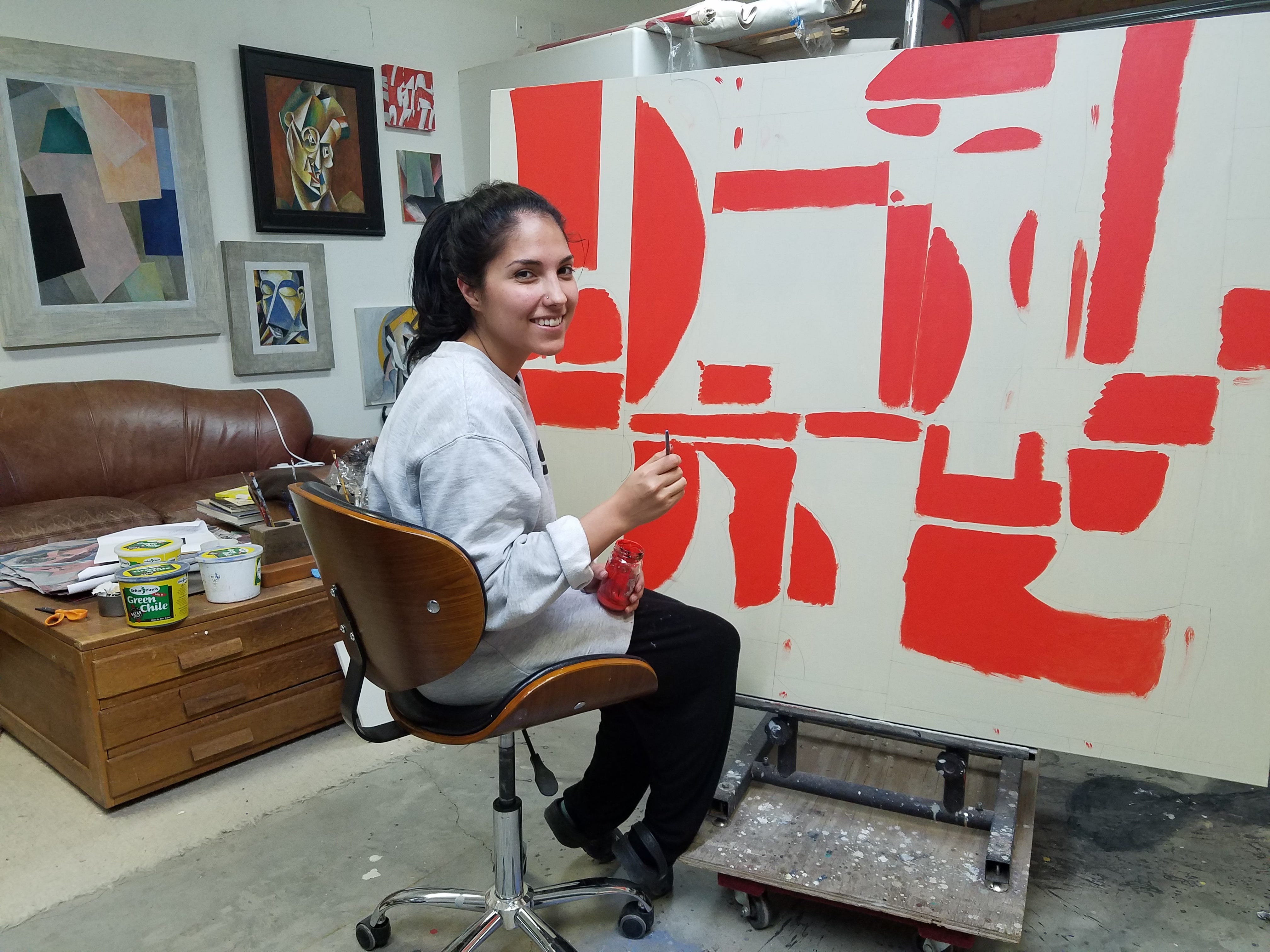
Art Starts at Home: Living by Default vs. Living Deliberately
Every artist knows the quiet, persistent hum of the inner calling. It is the quiet voice that urges you to pick up the brush, type out the scene, or hum the melody. Yet, society offers a much louder, pre-written script: get through school, secure a stable job, set up a household, pay your bills, and prepare for retirement. Along the way, you find someone to love, avoid suffering as much as possible, and fill the gaps by playing around on your phone. You know - the basics to get as comfortably as possible from cradle to grave.
This tension creates a defining choice for every creator: will you live your life by default, or will you live life deliberately?
Living by Default: The Comfort of the Script
Living by default means accepting this standard societal blueprint without questioning if it fits your soul. For an artist, this path is safe, predictable, and deeply suffocating.
When you live by default, you prioritize external security over internal expression. You might convince yourself that household duties, a day job, or family expectations mean you lack the time or permission to pursue your art seriously. You relegate your deep calling to a part-time hobby at best.
The danger of the default life isn’t failure; it is comfort. It is a slow, numbing process where the inner calling is gradually drowned out by routine. But for true creatives, that inner calling never dies. If an artist’s creative flow is thwarted in their own house, they will feel unfulfilled and gradually become unhappy. Ultimately, that quiet resentment and unexpressed grief works against everyone in the family.
Living Deliberately: The First Condition
To live deliberately is to wake up and consciously decide to shape your reality around your creative truth. The very first condition of this path is the audacity to claim your nature as an artist. You must commit to building a life around that core identity, treating the practice not as a weekend distraction, but as a fundamental way of life.
However, this initial threshold is where many would-be artists stumble. In the early phase, a profound wave of worry often surfaces:
The Fear of Non-Acceptance: Anticipating skepticism or pushback from a society that values predictable, conventional tracks.
The Confidence Deficit: Lacking the internal certainty to claim the title of “artist” before a public body of work or a market track record even exists.
The Missing Blueprint: Realizing there is no pre-existing template or clear model for a creative lifestyle. Each individual’s path is unique.
Entering this phase means stepping onto an ambiguous path that must be uniquely designed by your own hands. It is entirely natural to look at the blank canvas of a creative life and feel paralyzed by the lack of directions. Every deliberate creator must navigate this initial wilderness of uncertainty before finding their footing. Yet, once you anchor yourself in that internal clarity and commit to it, the outside world - and your immediate environment - begins to adjust to it.
The Routine of Commitment: Building Trust in the Early Years
For an early-stage creator, establishing a firm studio routine is more than just a tool for productivity - it is a vital anchor for the entire household. In the early years of a creative path, those around you may struggle to understand your trajectory. Without a traditional boss, a timecard, or immediate commercial validation, your practice can easily look like a passing phase or an unpredictable whim to onlookers.
This is why establishing concrete, daily habits is the most powerful language an artist can speak to their family. By showing up to the studio or the writing desk at the same time every day, you demonstrate serious, undeniable practice.
Routines provide a tangible structure that your loved ones can see, respect, and rely upon. They need to trust that this creative pursuit is a permanent, non-negotiable reality of how life will proceed forward. Once that trust is established, family members can stop worrying about the ambiguity of the path and begin to accept and adjust to its rhythms.
Ultimately, your creative practice may or may not become a full-time commercial profession and often doesn’t. But for the true artist, it is undeniably a serious vocation - a deep, internal calling that must be followed regardless of outside validation. Daily discipline is how you honor that vocation while building a bridge of functional predictability for the people sharing your roof.
The Collaborative Household: From Tolerance to Partnership
Once routine establishes structural predictability, the home can transition from a place of mere tolerance to a truly collaborative household. An art family does not simply stay out of the artist’s way; it actively integrates the operational realities of the creative life into the shared domestic engine.
In a collaborative household, the heavy administrative, organizational, and emotional weight of sustaining a creative practice is no longer carried by the artist alone. Instead, family life and studio life merge into a functional partnership.
Whether it involves a partner helping manage logistics, coordinating schedules around studio time, or honoring the physical spaces dedicated to output, the household adapts. This intentional alignment shifts the studio practice from an isolated, solitary struggle into a shared household narrative. When the domestic unit acts as a supportive team, the creative current moves forward with far less friction.
Turning Mundane Routines into Spiritual Practice
However, even the most cooperative home is prone to the natural fragmentation, noise, and sudden demands of family life. If an artist believes that creation can only happen when external conditions are absolutely perfect, they will inevitably default to not creating at all.
Living deliberately requires the capacity to transform mundane, everyday domestic routines into a conscious extension of your spiritual and creative practice. The creative current does not have to stop when you step away from the canvas or the manuscript.
By anchoring yourself in simple, disciplined daily rituals - such as a silent morning walk, a focused moment of meditation, or keeping a minimal daily journal - you maintain a constant state of internal awareness. This shifts your creative perspective entirely. The search for beauty is no longer about locating a perfect, isolated object; it is about refining your internal capacity to remain deeply present, open, and attuned amidst the inevitable chaos of the everyday grind.
The Art Family: Normalizing the Creative Rhythms
When these layers of routine, collaboration, and mindfulness converge, they fully manifest the “art family”. In this environment, creative activity is completely normalized as a baseline fact of everyday life.
Think of how naturally a household accepts sports gear, rigid practice schedules, and loud game-day cheers if a family member is a sports fan. If art is an important element to a family member, everyone else accepts it as a simple fact of their collective reality. When the practice is out in the open rather than hidden away, life goes much better for everyone.
Creating an art family means:
Accepting the Mess as Home Decor: Allowing wet canvases, manuscripts, or specialized tools to occupy shared spaces just like sports equipment or books.
Weaving Practice into Routine: Normalizing the sight, sound, and presence of ongoing creation so family members never view it as a selfish intrusion.
Fostering a Culture of Deep Pursuits: Recognizing that this setup applies to anyone driven by a deep inner compulsion - whether they are musicians, writers, poets, or people compelled by fitness, gardening, nature, or history. A inner calling is a calling no matter what form it takes.
The Universal Truth
While the creative path is uniquely ambiguous and frequently discouraged by a world obsessed with the grind, the core truth remains universal. Anyone who feels a deep compulsion to pursue a topic in depth must claim it.
The transition from a default life to a deliberate life is a daily choice. Every morning, the world invites you to slip back into the default track - to consume rather than create, to conform rather than express. Answering the inner call requires radical responsibility. It asks you to brave the vulnerability of being misunderstood by those who prefer the comfort of the script. But on the other side of that fear lies a life designed by your own hands, lived entirely with purposefulness and intention.
Thank you for this, so brilliantly articulated!
When the kids were little but old enough, I could have them (well one at a time as they were 5 yrs apart) in the studio with me. I'd put down some 'art' supplies for them to play with for example: objects they could string on some wire to make their own art with. My daughter even made some assemblages as well which I loved. Most of my routines don't have to do with creating art. I do them and as a reward of sorts will then go into the studio and work there, satisfied that I have nothing hanging over me that needs to get done outside of making art. Making art has pretty much always been done according to my family and my needs back then. Since living alone the last couple decades other with some pets... it's been easy to just go into the studio at any time of day or night and work without any disruption to anyone else.