


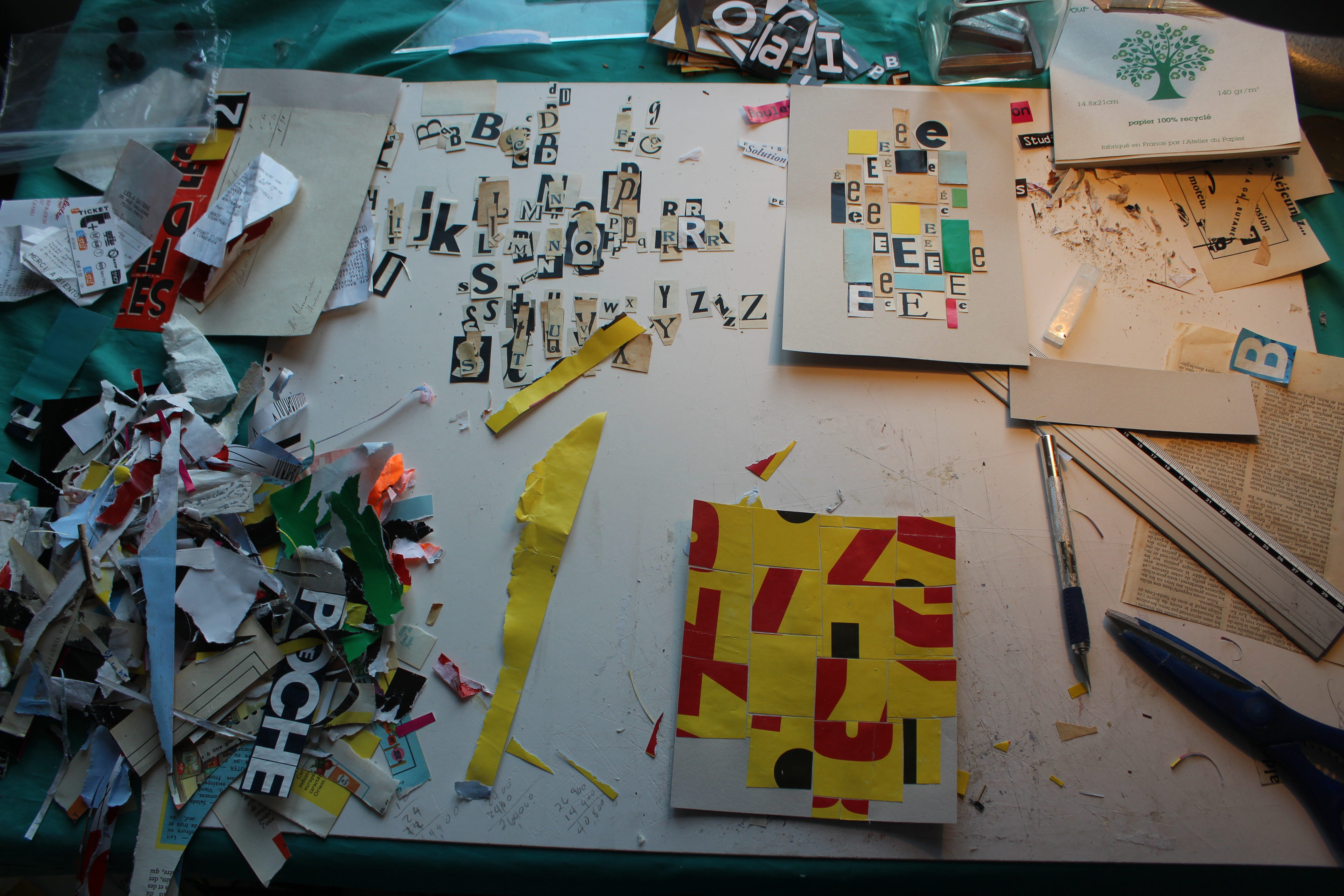
When the Work Makes Itself
Artists have often described a peculiar moment in the making of a work when they seem to stop being the one who is making it.
The painter has been working for hours and suddenly looks up to discover that the painting is finished. The writer reads a passage afterward and wonders where it came from. The musician stops playing and realizes that an hour has disappeared. Decisions have been made, problems solved, passages negotiated, yet there is strangely little memory of having consciously made any of those decisions.
Something took over.
We have many names for this condition. We say we were in the groove. We were in the zone. We entered a state of flow. Older traditions might describe the person as an empty vessel or a hollow reed, something through which the music, the poem, the gesture, the idea, or the image passes.
These descriptions differ, but they point toward a remarkably similar experience: the temporary disappearance of the feeling that I am doing this.
This does not mean that nobody is doing anything. Quite the opposite. The artist may be extraordinarily active. The hand is moving. The eye is judging. Choices are being made constantly. Years of experience are being brought to bear on every gesture. Yet the internal commentator who is ordinarily announcing, evaluating, questioning, congratulating, worrying and criticizing has gone quiet.
The work continues without requiring a narrator.
Consciousness in such moments can be imagined as a luminous mirror.
A mirror does not have to struggle to produce a reflection. If it is clear and unobstructed, it simply reflects whatever appears before it. Nor does the reflection belong to the mirror. The mirror cannot possess it. It cannot store yesterday’s reflection and insist that today’s resemble it. It cannot reach out and hold what passes across its surface.
The image appears. The image disappears. The mirror remains available.
For the artist, this availability may be more important than inspiration.
Much of what interferes with creative work is not an absence of ideas but the accumulation of ourselves around them. We feel the need to intervene. We want the work to be good. We want it to be original. We want it to look familiar to us. We wonder what the gallery will think, what the reader will think, what our friends will think, whether anyone will buy it, publish it, understand it, misunderstand it, praise it, dismiss it, remember it.
The mirror becomes covered with our mental fingerprints.
Then we are no longer simply seeing what is before us. We are seeing our anxieties about what is before us.
The peculiar selflessness of creative immersion clears some of that away.
This is one reason the word selflessness interests me more than the word flow. Flow describes what the experience feels like. Selflessness suggests an obstruction that has temporarily disappeared.
The self has not actually ceased to exist. We have not become unconscious. We may, in fact, have become unusually conscious. What recedes is the constant insistence upon ourselves as the center of the activity. That is when we are in our own way. When we are in our own way that is called creative block.
But when in a state of selfessness there is still seeing, but less of me seeing. There is simply seeing, painting, writing, listening, moving.
And then an interesting reversal becomes possible. Instead of imagining that I am making the painting, I begin to experience the painting as something that is happening, and I am participating in its happening if I even notice me at all.
Anyone who has worked seriously at an art form probably knows something about this reversal. A work reaches a certain point where it begins making demands of its own. A color requires another color. A sentence changes the sentence that must follow it. A shape creates a problem elsewhere in the composition. Something is removed and suddenly an entirely different possibility becomes visible.
At that point, imposing one’s original intention upon the work can actually interfere with it.
This is when the artist begins listening.
This is why creative work can sometimes feel less like invention than discovery. One begins with an intention, but somewhere along the way the work acquires enough internal relationships that it begins suggesting its own possibilities.
The artist’s task changes from intervening to attending.
What does the work need?
What is trying to happen here?
What happens if I move this?
What happens if I leave it alone?
Eventually even those questions disappear. Eye, hand, material, memory and imagination enter into a continuous conversation that happens too quickly and too intimately to require words or self awareness.
Then time disappears.
We often say that we “lost track of time,” but perhaps the phrase deserves closer attention. The clock has continued running. What has disappeared is our monitoring of ourselves moving through time.
For a while there is only the activity.
And this experience is hardly confined to artists.
A gardener can disappear into a garden. A carpenter can disappear into a piece of wood. A cook can disappear into preparing a meal. A person repairing an engine, walking through a forest, sewing a dress, solving a mathematical problem or playing with a child can enter the same condition.
The activity becomes sufficient unto itself.
This suggests that the state we associate with artistic creation may belong to a much larger human capacity: the ability to become so completely immersed in an encounter that the boundary between the observer and the observed becomes temporarily less important.
We become what we are attending to.
The painter becomes color, edge, interval and gesture. The musician becomes rhythm and tone. The writer becomes language. The gardener becomes soil, root, moisture and season. The walker becomes the path.
Perhaps this is why such experiences can feel restorative even when the activity itself is exhausting. For a little while we are relieved of the burden of continuously maintaining ourselves as a story.
We are simply present.
Of course, nobody can permanently live this way. The artist eventually steps back from the painting. The writer rereads the page. The musician listens to the recording. Judgment returns. Editing returns. Practical questions return. The self comes back and has useful work to do.
But the problem is not that the self returns. The problem comes when it never leaves.
An artist who cannot occasionally forget themselves may find it difficult to encounter anything that has not already been filtered through what they think they are supposed to be or do.
So one of the disciplines of an artistic life is learning how to become available. To be fully present in the present.
We prepare the studio. We sharpen the pencil. We tune the instrument. We arrange the materials. We develop our skills over years and decades. We show up repeatedly, whether inspired or not. All of this matters.
But underneath those practices is another practice that is harder to describe.
Keeping the mirror clean.
Not so that we can disappear forever, nor so that some mysterious outside force can take possession of us, but so that when something appears before the imagination, we are capable of receiving it without immediately trying to own it.
The reflection does not belong to the mirror. The music does not belong to the hollow reed. Even the work does not entirely belong to the artist.
We participate in its coming into being. We give it our experience, our skill, our memory, our hands, our attention and our time. But in the deepest periods of making, the distinction between maker and made can become surprisingly thin.
And then, every once in a while, we look up. Hours have passed. The room has changed and often we are surprised by what has just occurred.
We have moved from intuitive intelligence back to rational intelligence. To move back and forth between these two forms of intelligence is, at first difficult and disorienting.
Let’s move on to article #3

Dear Cecil,
Wow, is this good! This kind of immersive technique is what I've been touting for years in my understanding of mimesis. It reminds me of the late great Annie Dillard and her insistence that we just "be" — taking the time to rub a puppy's belly in the sunshine without concern that we are "wasting" those moments. And Betty Edwards's instruction, in Drawing on the Right Side of the Brain, that we "draw what's there, not what we think ought to be there." All of it with a view to dismissing our inner critic for a time during the creative process and entering a state of being "un-self-aware."
Thank you!
How I love this concept of the 'work making itself' which is how I often realize that is happening and it's mostly something that I am aware of once the piece is finished or almost there. I've been working on a piece the last week and it is almost finished but I'm not sure what it needs to be completed and signed. So I sit with it and wait for it to tell me, to let me know what it wants and I will follow it's command so that it feels done......not necessarily that I decide it's done. Yet I always agree with a piece when it lets me know it's completed. There's a communication between the art and myself that is mutual, symbiotic.